Designing smart matchmaking for virtual events
Context
My role
Hopin
B2B SaaS
Design Lead
2022
Scroll to explore
Organizer experience
Atendee experience
Design evolution
1
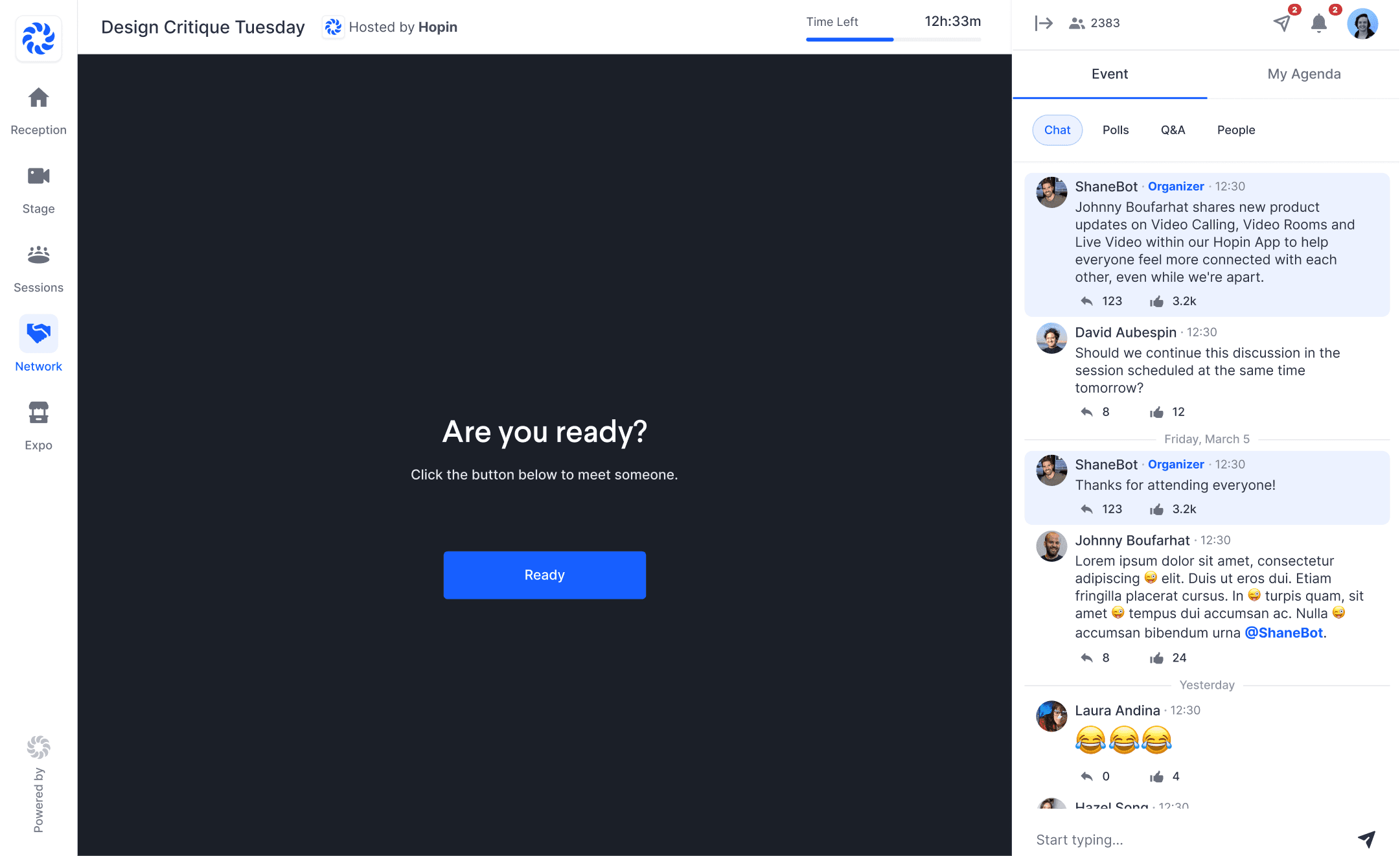
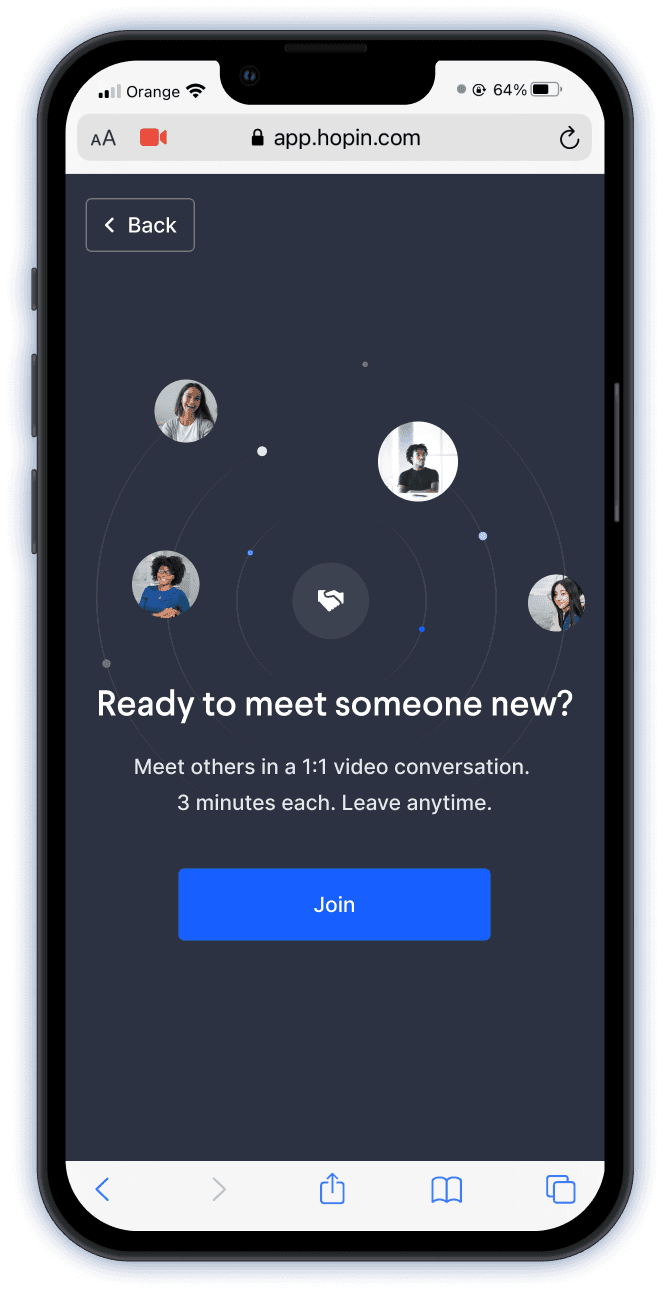
Random pairing
2
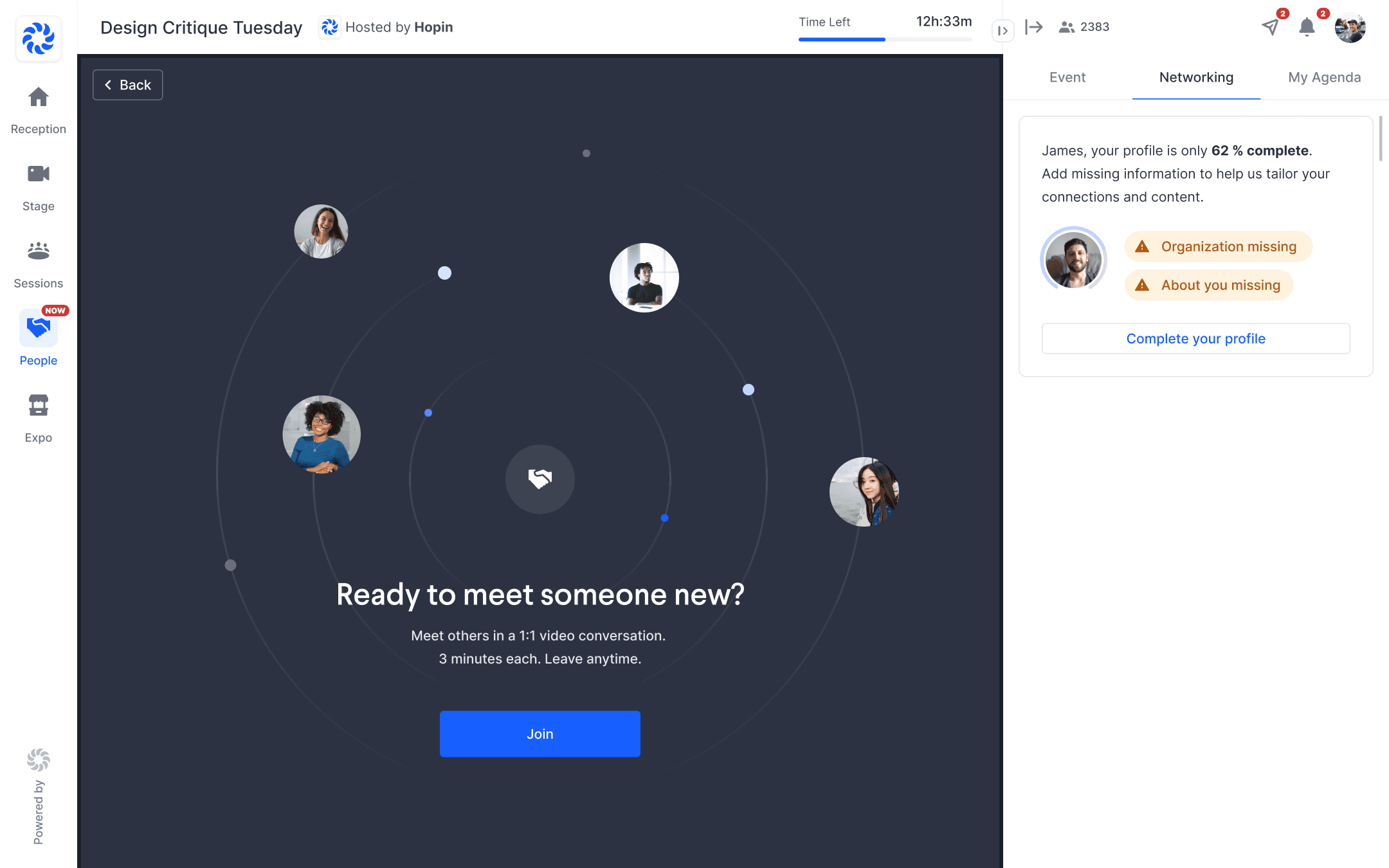
Smart matching
3
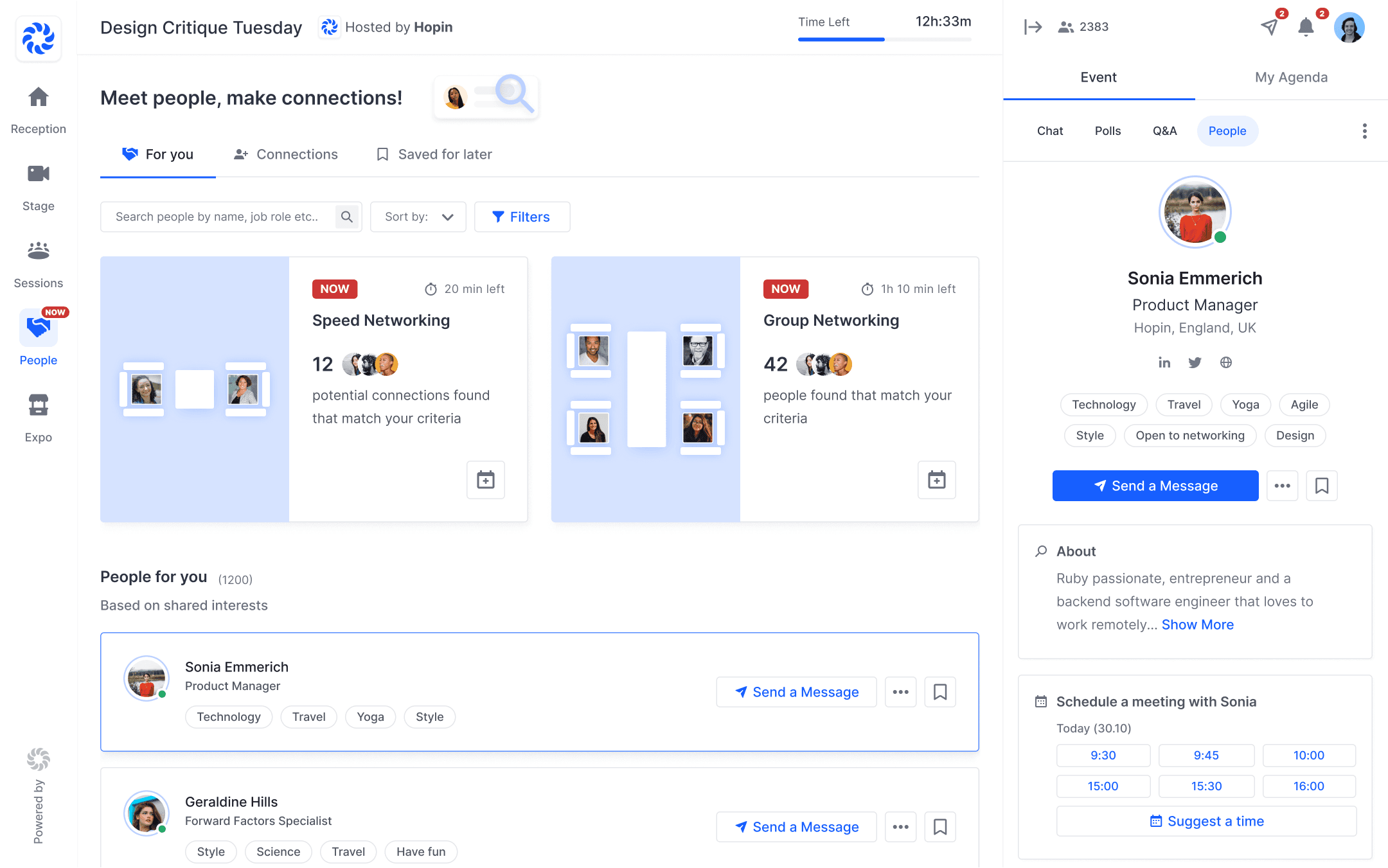
People area
People Area: Introduced advanced filters, smart suggestions, and calls scheduling.
Summary
Problem
Virtual networking felt like a gamble. Our "random pairing" model left users feeling awkward and insecure, lacking the context needed for meaningful conversation. This wasn't just a UX issue; it was a churn driver. We were losing enterprise contracts to competitors with smarter tools. To stop the bleeding, we had to pivot from random connections to Smart Matching.
Solution
I redesigned the Networking experience during virtual events pivoting from "random roulette" to Smart Matching.
The new data-driven "People area" section introduced interest-based recommendations, advanced attendee search, and pre-event scheduling to drive high-value business connections.
Impact
+17%
lift in key connection activities: DMs sent, 1:1 meetings scheduled, and profile connections made.
34%
events enabled the People Area within 1st month after launch.
Top #5
Networking ranked 5th favorite feature according to the organizers.

Process
Business Challenge
Hopin, as an all-in-one SaaS platform, was losing competitive deals to niche platforms that offered superior networking.
The core problem was feature parity—our random matching was not sufficient for bigger, high-value events. Our mandate was to redefine networking from a fun feature to an essential ROI driver for event organizers.
Attendee & Organizer Pain Points
I identified the full event experience journey together with Design team.
In order to design great attendee experience it was crucial to gain a comprehensive understanding of the entire product.
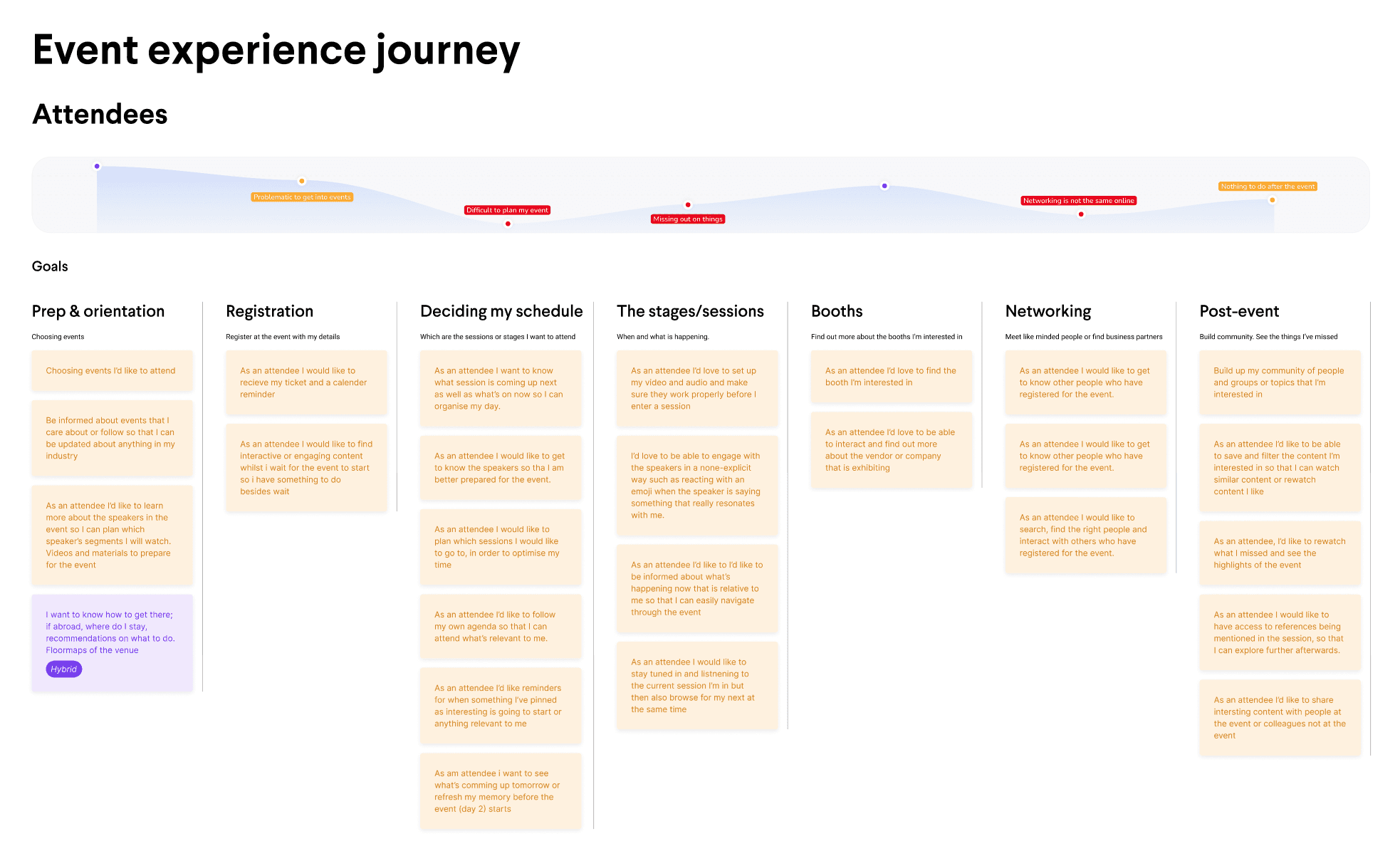
Attendee & Organizer Pain Points
I led the discovery and strategy to shift mindset from random connection to intentional matchmaking.
Attendee Insights: Through user interviews, I identified three primary goals for joining events: Grow Career, Grow Business, and Grow Knowledge. The key friction points were lack of information and awkwardness when starting a conversation. This proved random matching was fundamentally misaligned with user intent.
Organizer Insights: Interviews with 10+ organizers confirmed that common interests, job role, and industry type were the key categories for meaningful matches. They explicitly requested control over matching categories and the ability to schedule meetings before the event even started (a major sales opportunity).
Defining the System
The single most strategic task was designing a customizable system for collecting rich profile data (interests, job role) that could power all subsequent features—not just networking.
I recognized that relying solely on registration questions was brittle and unreliable. My solution was to introduce a separate, intentional "Profile Completion" flow upon event entry, ensuring we collected the high-fidelity data (like job title, industry, and interests) needed for sophisticated matching.
Future-Proofing the Platform: This foundational design decision was key: the rich data collected became the engine for future features like smart session recommendations and speaker follow suggestions, transforming networking data into a platform-wide intelligence asset.
The Scalability Challenge: The main design hurdle was creating one scalable pattern for data collection, despite every organizer having different needs. Our solution prioritized identifying the few universal, high-value data points across all event types, minimizing setup time for organizers while maximizing utility for attendees.
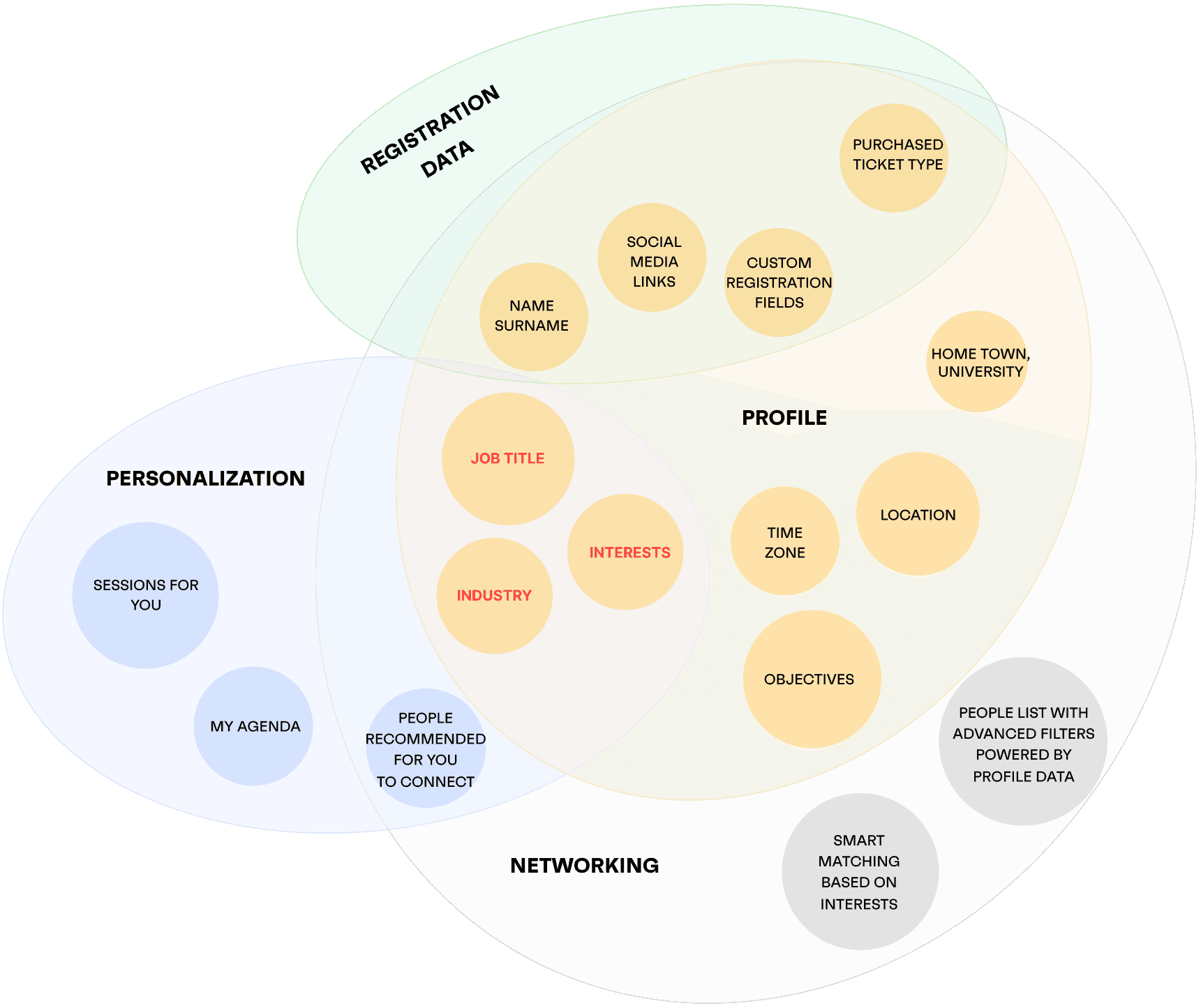
Concept & Prototype testing
My process combined qualitative interviews, iterative concept testing to build a solution aligned with both user needs and organizer ROI.
Key Insights: Organizers
Customization: Organizers require granular control over matching rules, as every event is unique.
Pre-Event Engagement: Data showed 50% of networking happens pre-event, validating the need for early access.
Efficiency: Strong demand for pre-filled interest templates to reduce setup time.
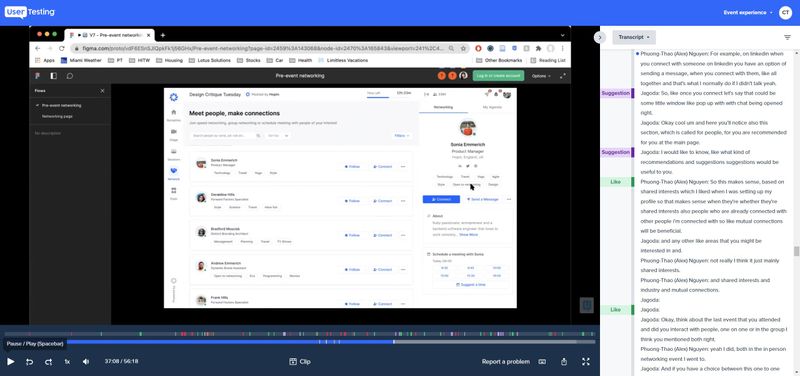
Key Insights: Attendees
Intent over Chance: Users prioritize "Request a Meeting" or "Message" over random pairing—especially high-value personas (investors).
Friction Point: The legacy "Connect" button was ambiguous and compared poorly to LinkedIn, identifying a key area for redesign.
Trust Signals: Users requested "mutual connections" to validate strangers before engaging.
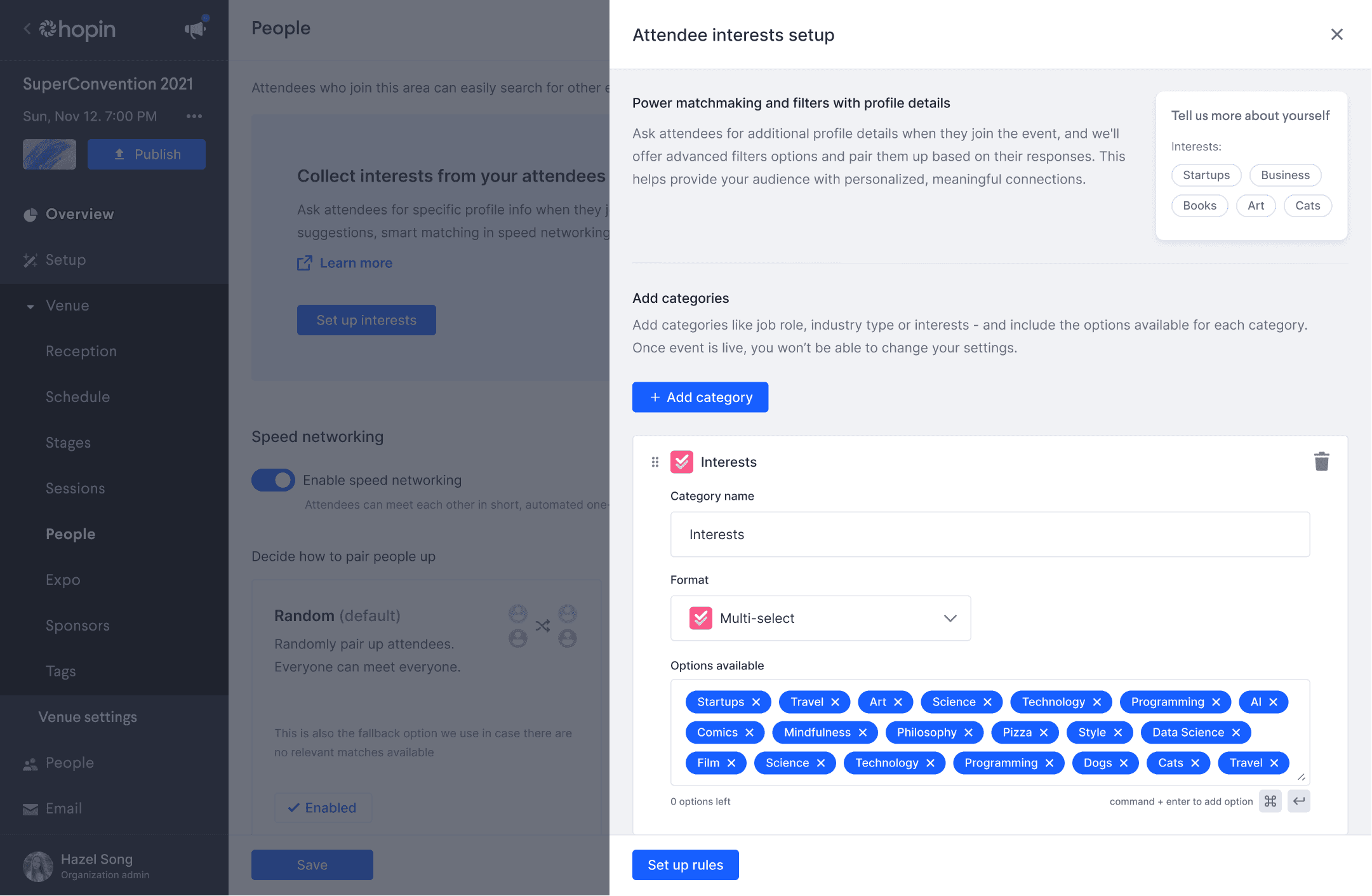
For first attempt, I designed a full screen Custom Networking Settings page where organizers could create their own categories for data collection and set up rules in the next step.
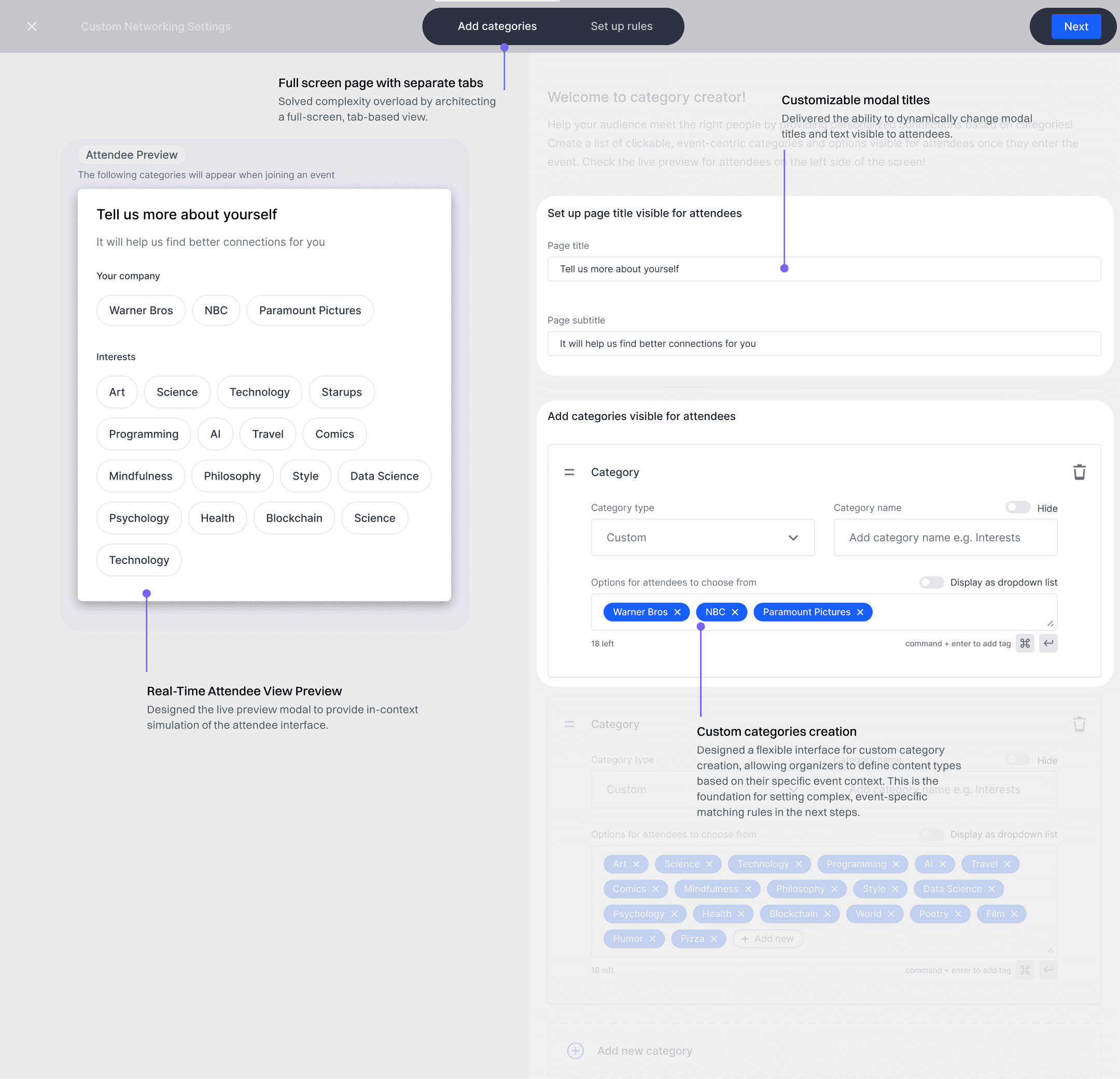
Later I've decided to reuse the developed right side panel pattern to keep consistent settings behaviour across the dashboard
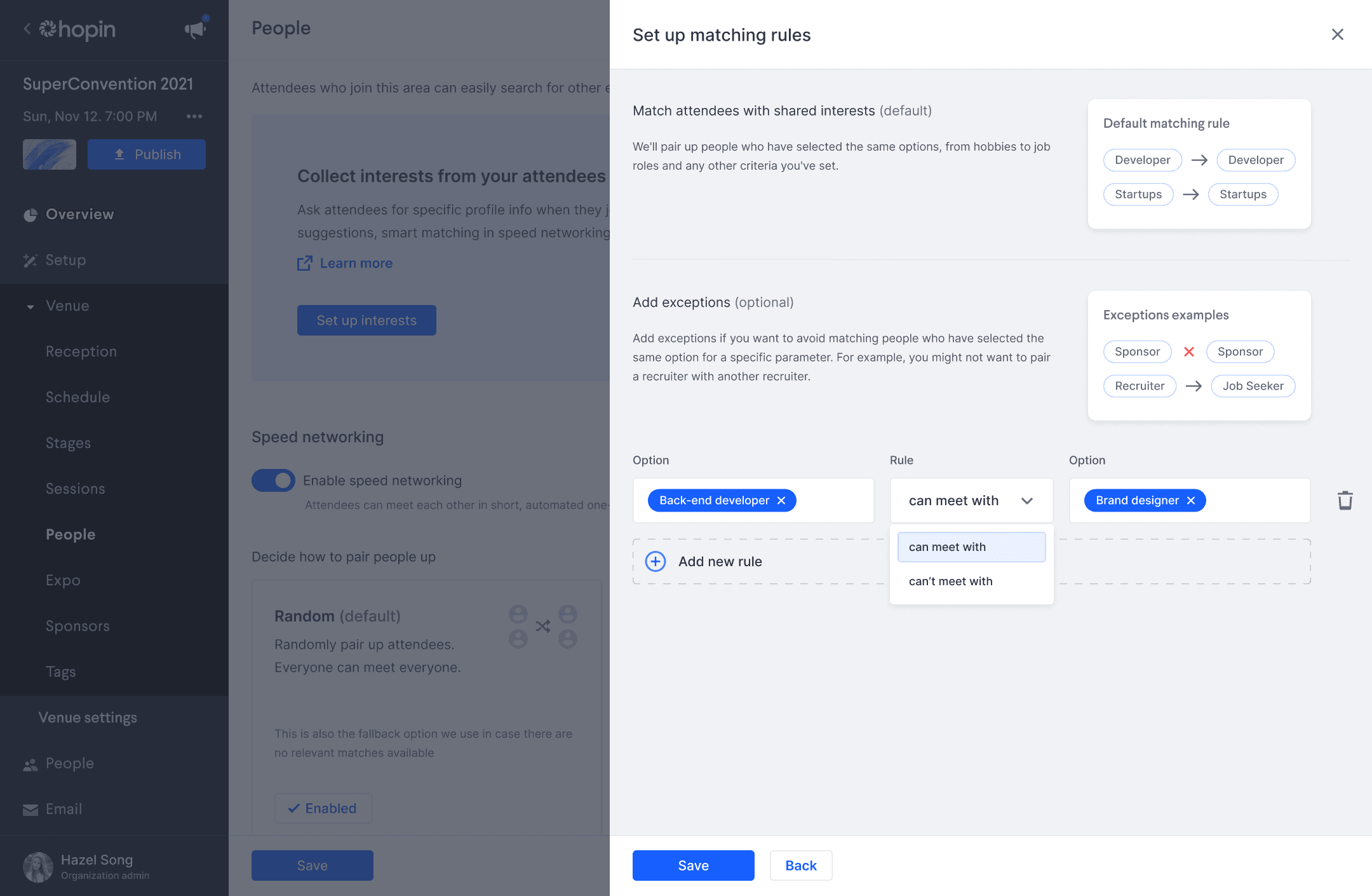
Setting up rules
For matching rules simplicity I provided a functionality that focused on creating exceptions from general rule
Dashboard evolution
The next design challenge was how to show the difference between networking matching preferences
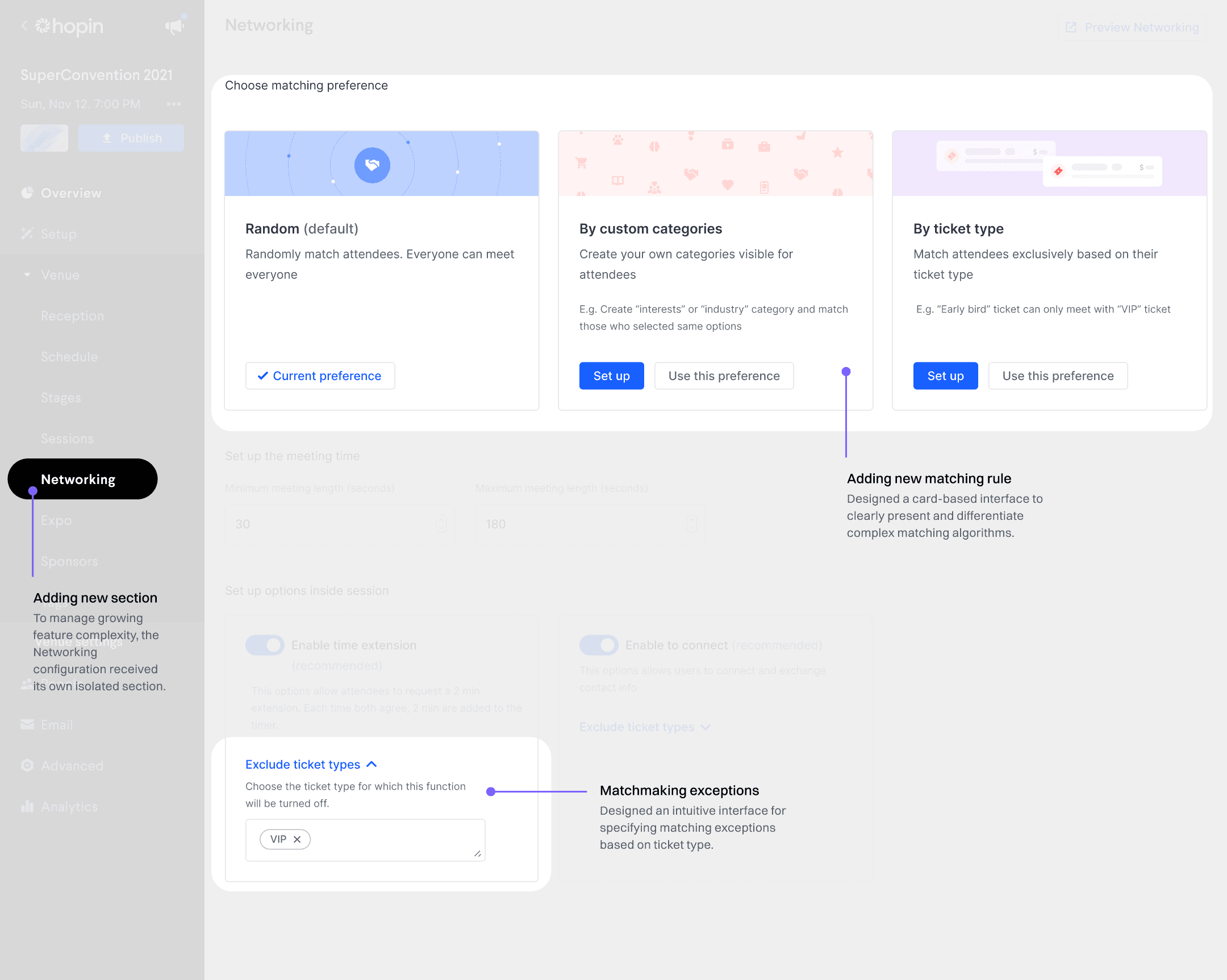
Developed Dashboard
When designing new "People area" section the visual hierarchy of elements was very important. I decided to distinguish different matching methods using three cards with proper UX copy and iconography.
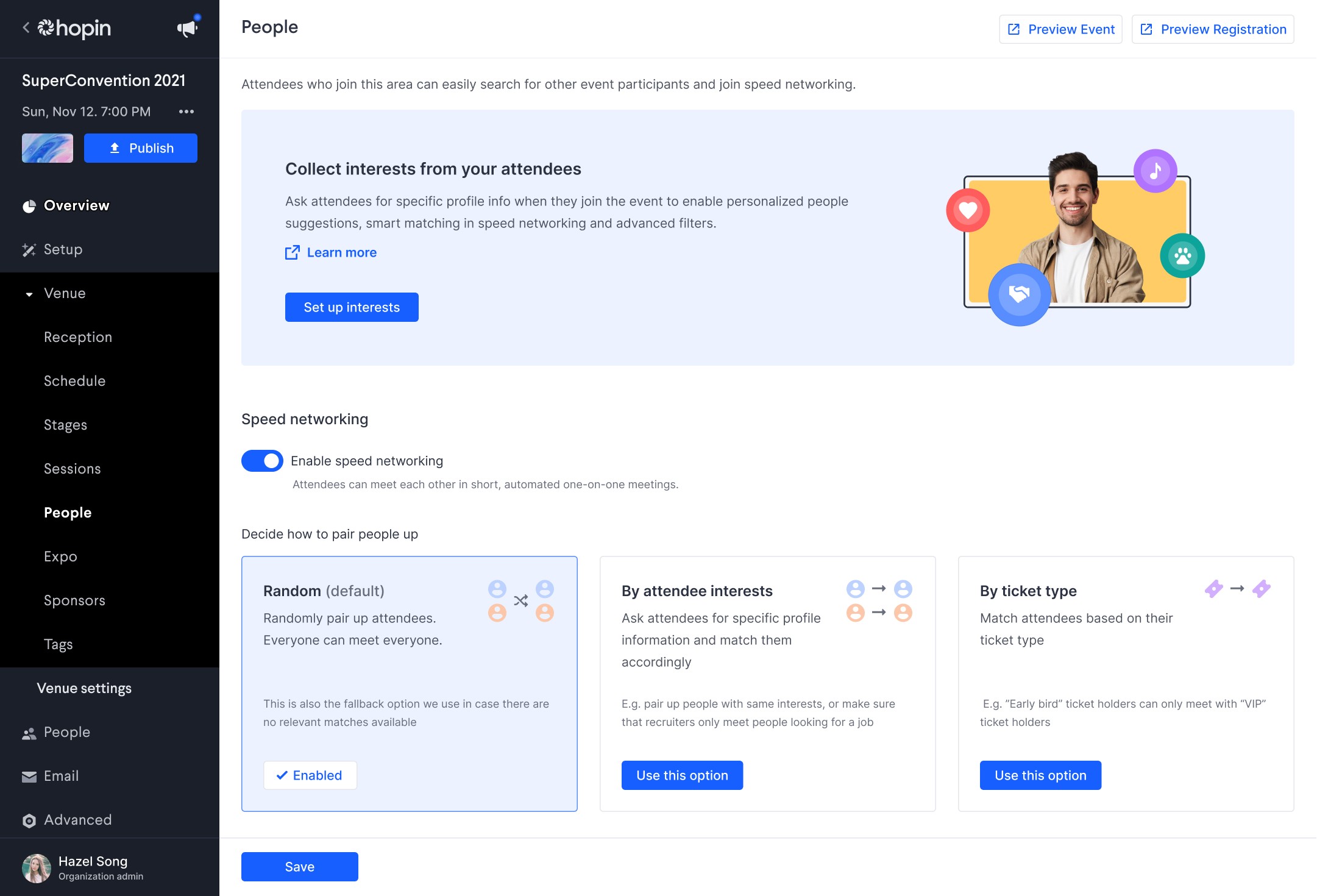
Developed People area
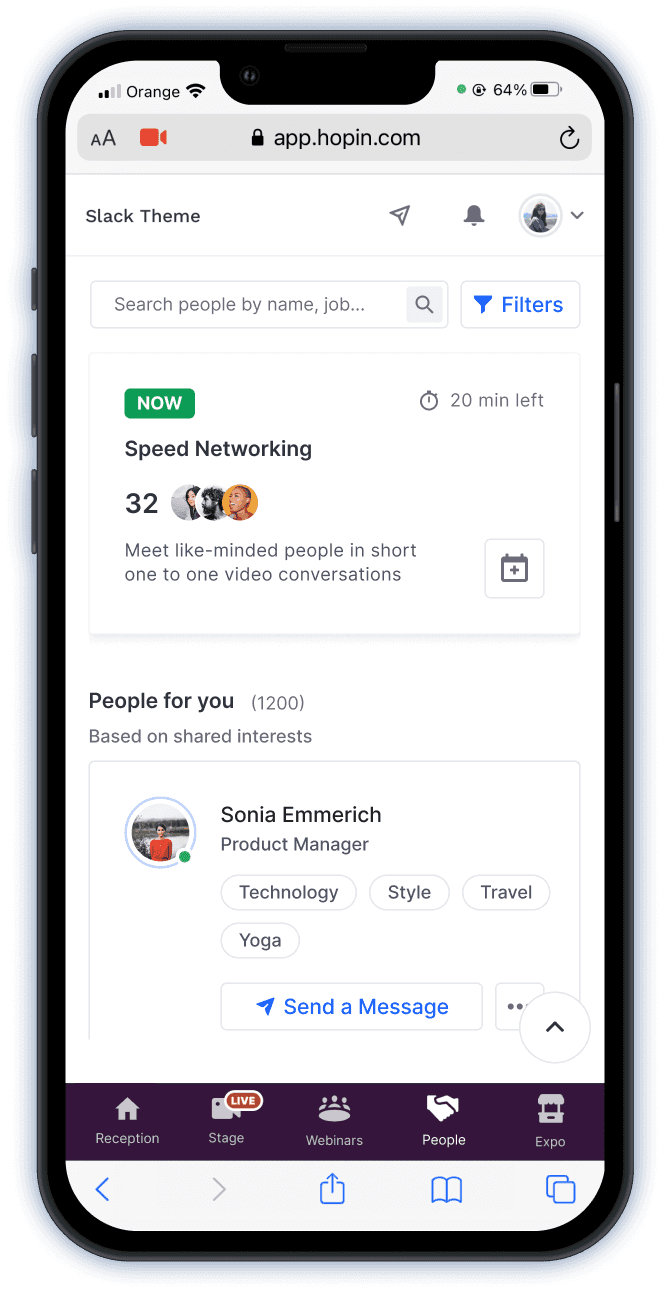
The new design provides a separate section on the left sidebar called "People" where attendees can join one-on-one speed networking sessions, and browse the list of people using advanced filtering options.
Developed 1:1 Speed Networking
Attendees were now matched based on profile data collected during registration and specific matching rules configured by the organizers.
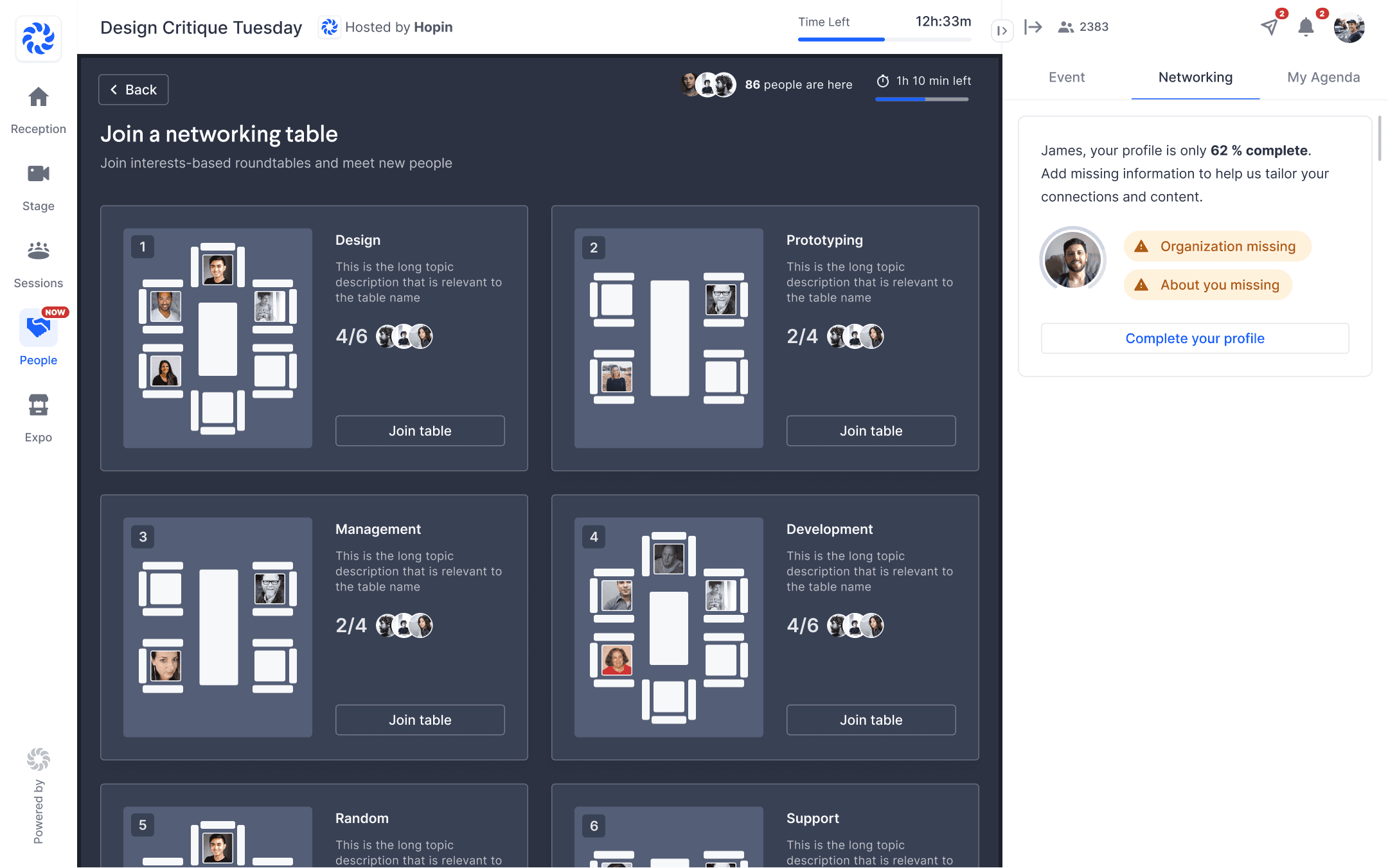
Vision: Group Networking
Idea of having different virtual tables to discuss different topics.
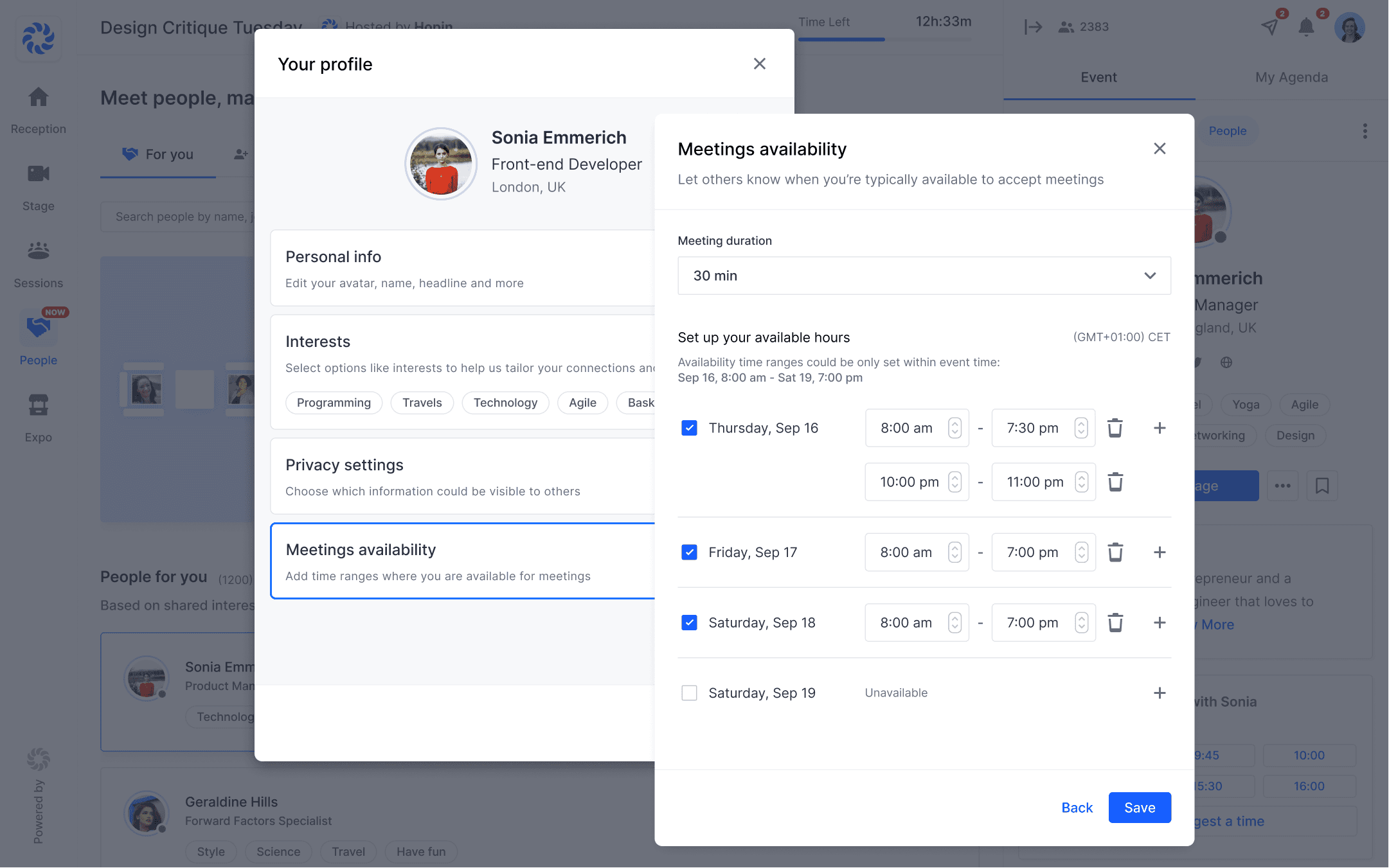
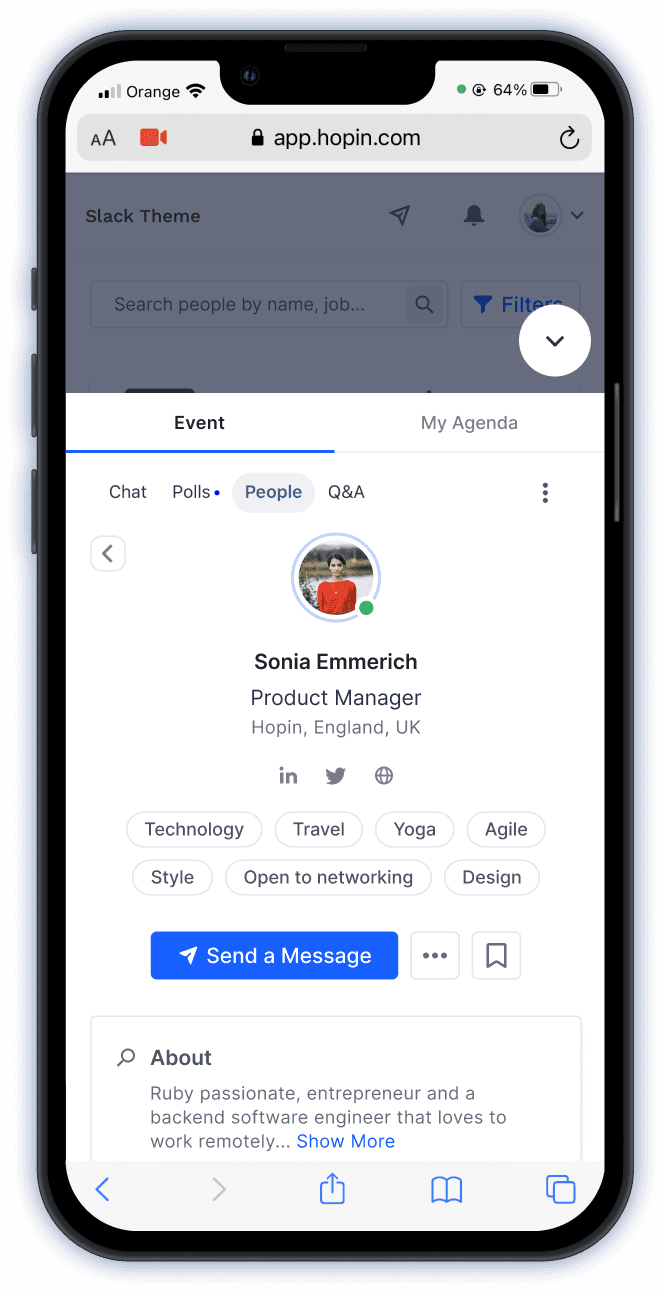
Developed Profile
Attendess could set up their meeting availability during the event.
Results
+17%
lift in key connection activities: DMs sent, 1:1 meetings scheduled, and profile connections made.
34%
events enabled the People Area within 1st month after launch.
Top #5
Networking ranked 5th favorite feature according to the organizers.
Events with People Area Enabled performed much better than events with only old Networking
More attendees having DM conversations with a reply.
More attendees joining Meetings with two or more participants.
More attendees joining Networking sessions
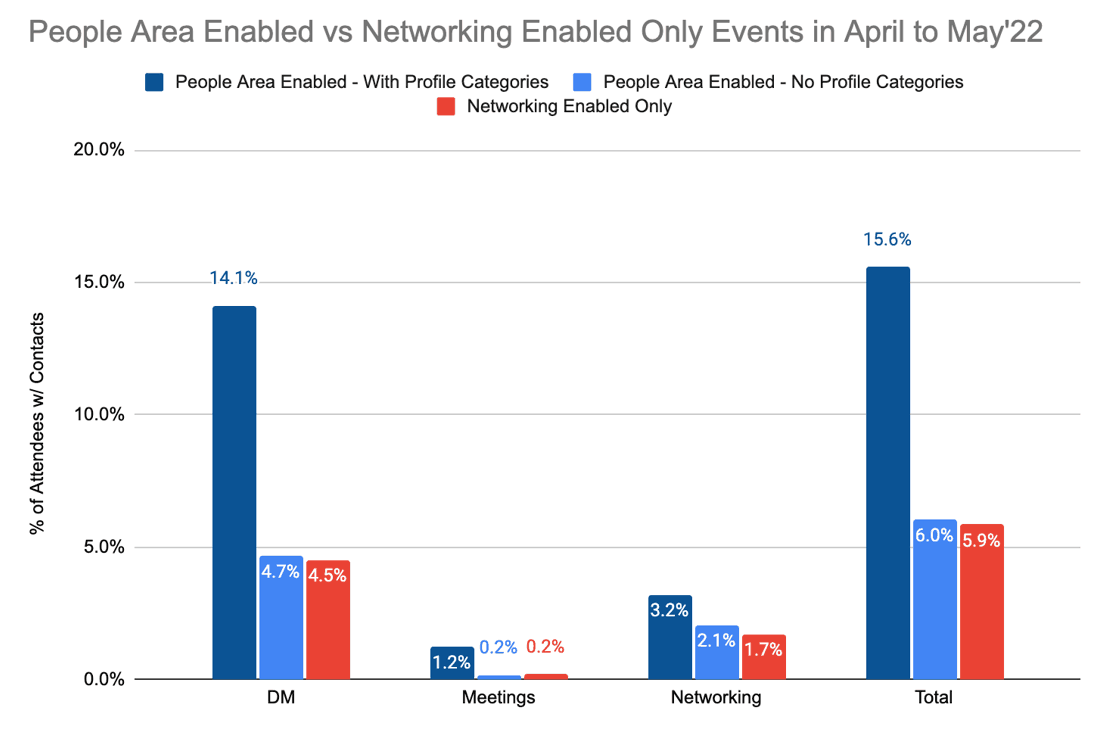
Profile Suggestions had a big impact in terms of matching attendees together
Having some sort of predefined categories templates that organizers can choose from could increase categories/tags adoption.
Learnings
My work demonstrated that data-driven matchmaking is the key value differentiator
The most critical systemic decision I made was successfully designing the profile data collection flows. This data became the engine for not just advanced networking, but also long-term platform utility, such as smart session recommendations, proving my ability to design for long-term scalability.