Redesigning onboarding for creative writers
Context
My role
ProWritingAid
B2C
Growth Design Lead
2025
Scroll to explore
Design evolution
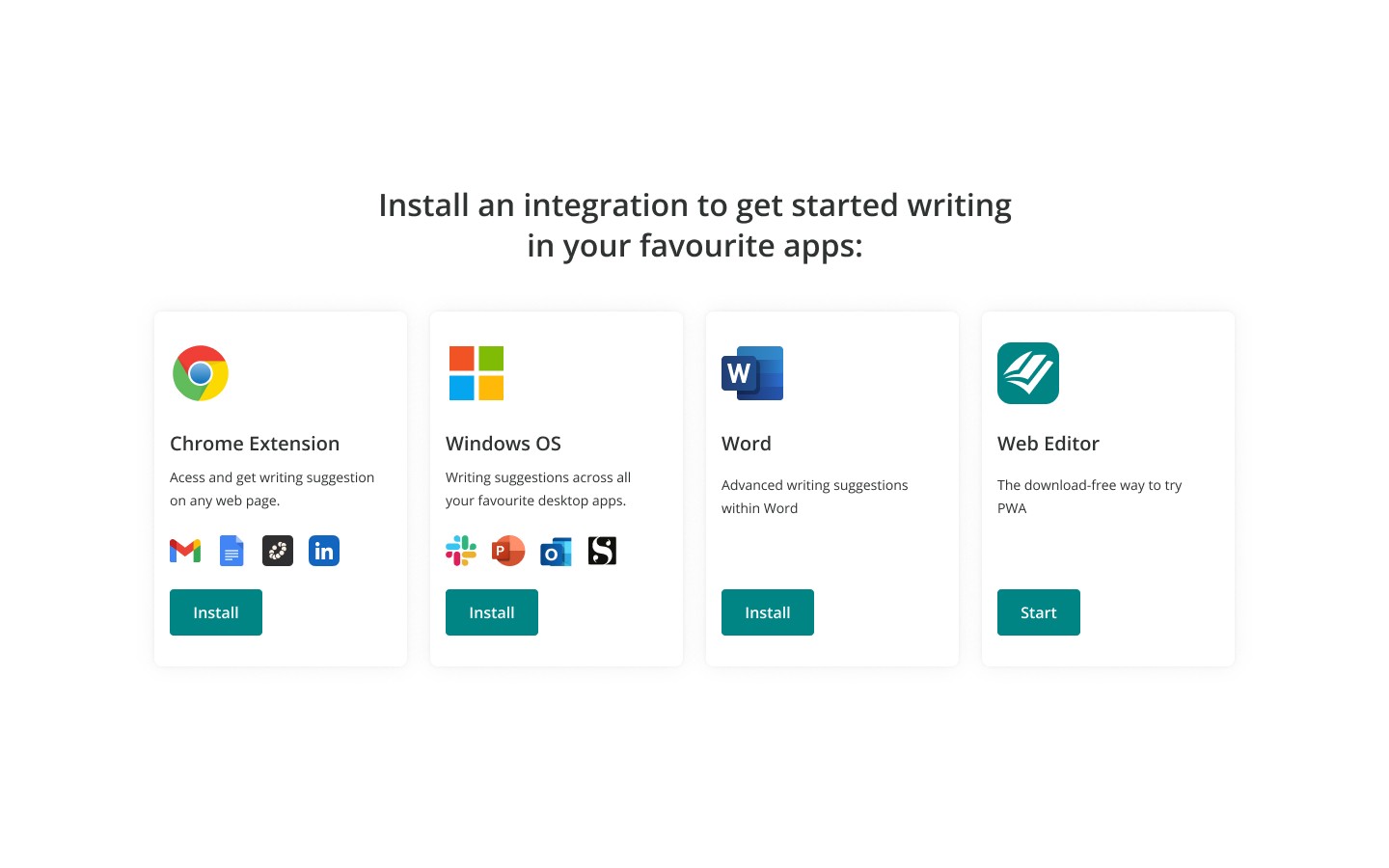
The Paralysis of Choice: 4 equal-weight CTAs diluted focus, causing high churn.
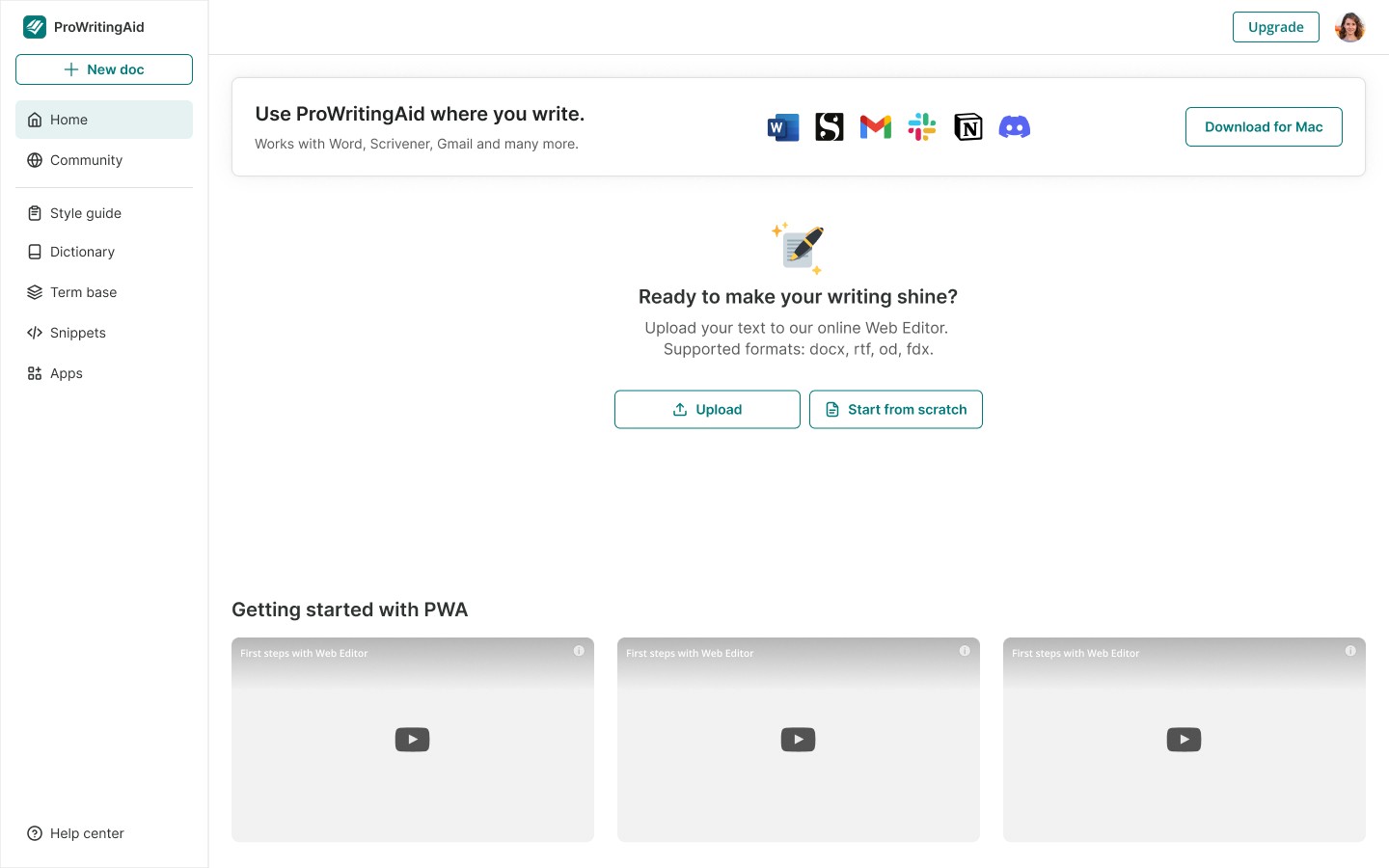
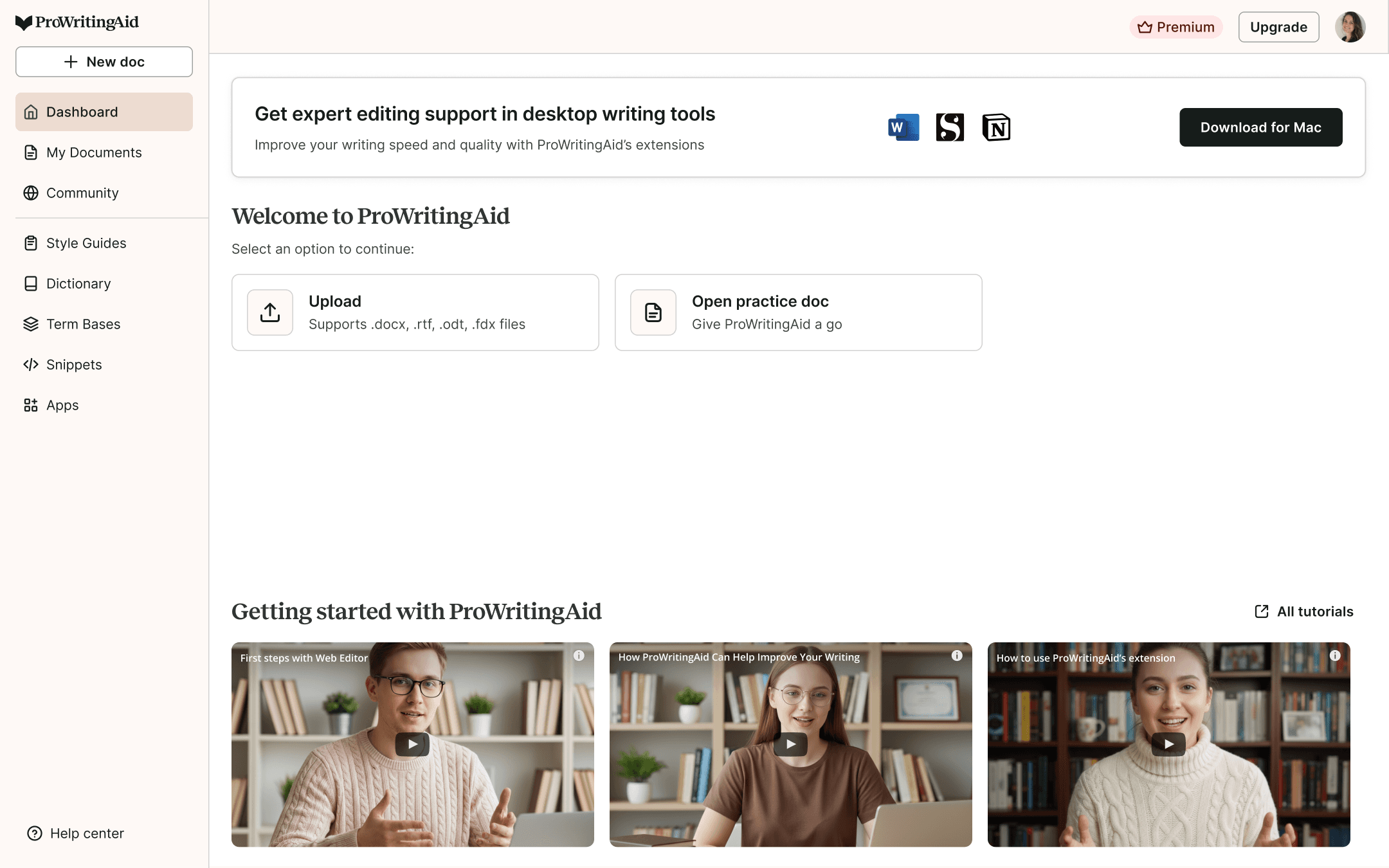
The Strategic Real Estate: I introduced a unified Dashboard to centralize the 'Aha' moment.
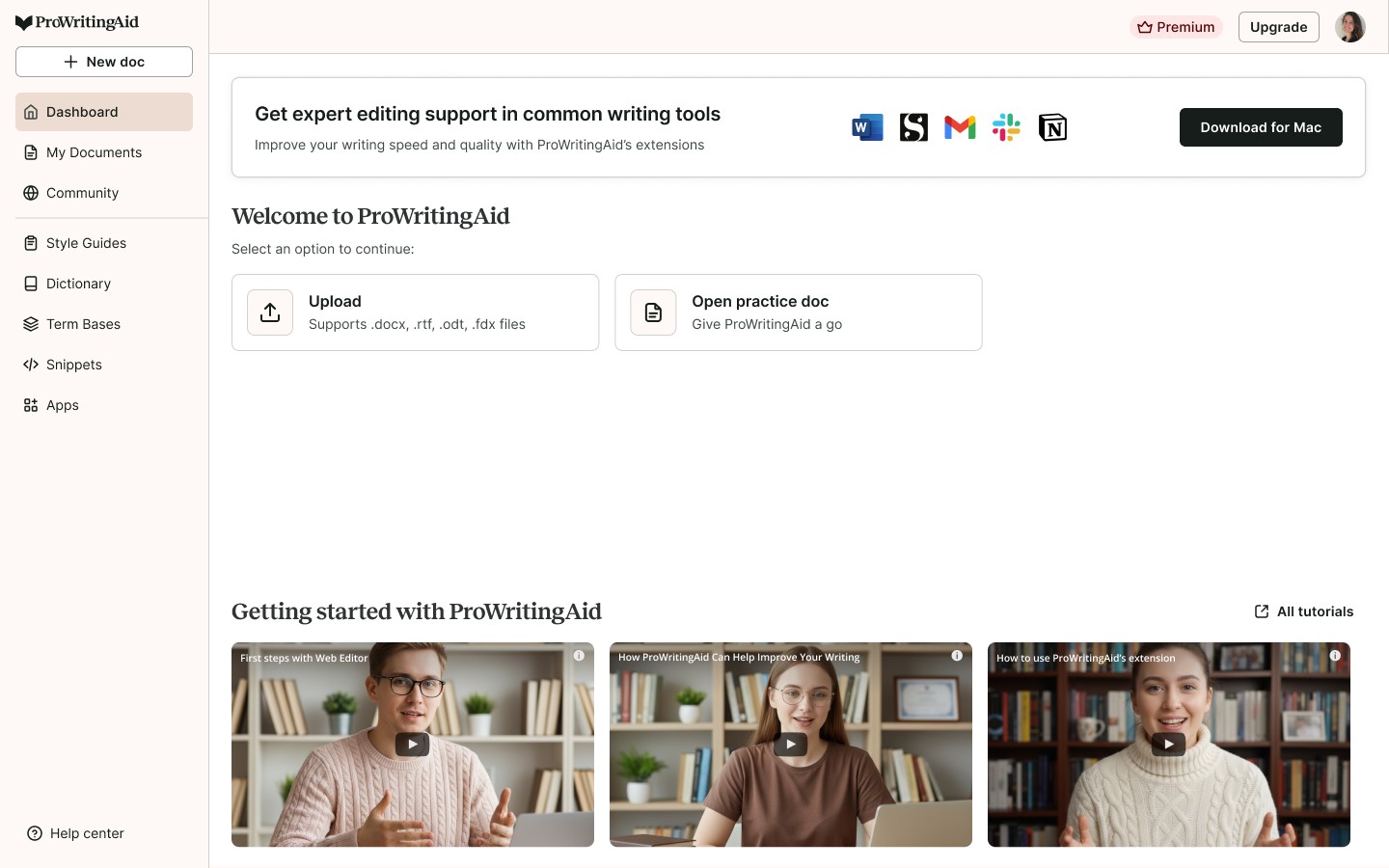
Activation experiments: Reduced friction by 40% by pre-loading sample text.
Summary
Problem
New users were churning before experiencing the "Aha Moment" (line editing).
The legacy flow forced an extension install, blocking 82% of traffic from experiencing immediate value.
Goal:
Increase D30 Activation (users accepting 10+ suggestions) from 24% to 35% to unlock higher retention and LTV.
Hypothesis
Guiding users into the zero-install Web Editor environment via pre-uploaded content (example text or user document) will allow users to test core functionality and experience the product's value before any commitment, thereby increasing both activation and paid conversion.
Impact
+17%
YoY Growth Revenue
+33%
increase in Day 1 Paid Conversion.
+5.5%
increase WoW in Activation D1
Solution
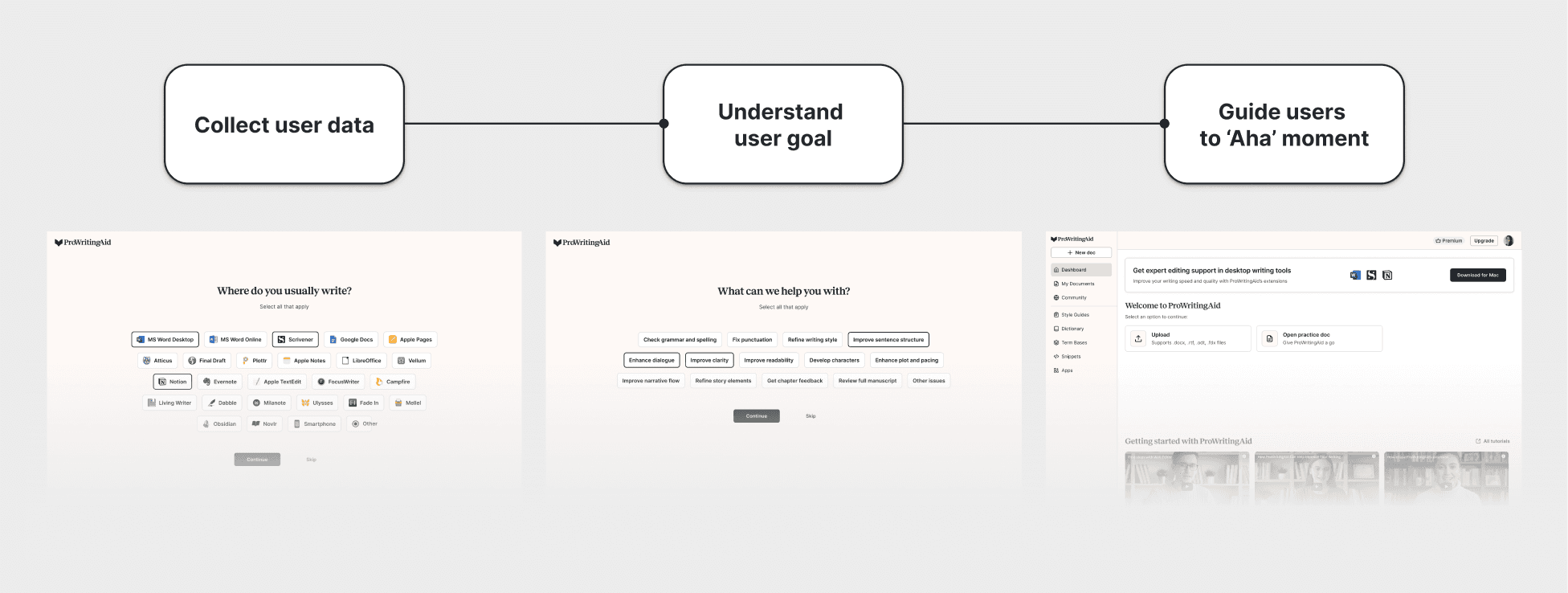
Zero-Install Focus
Routed 86% of users directly to the Web Editor (up from 65%), removing install friction to accelerate "Time to Value."
Smart Segmentation
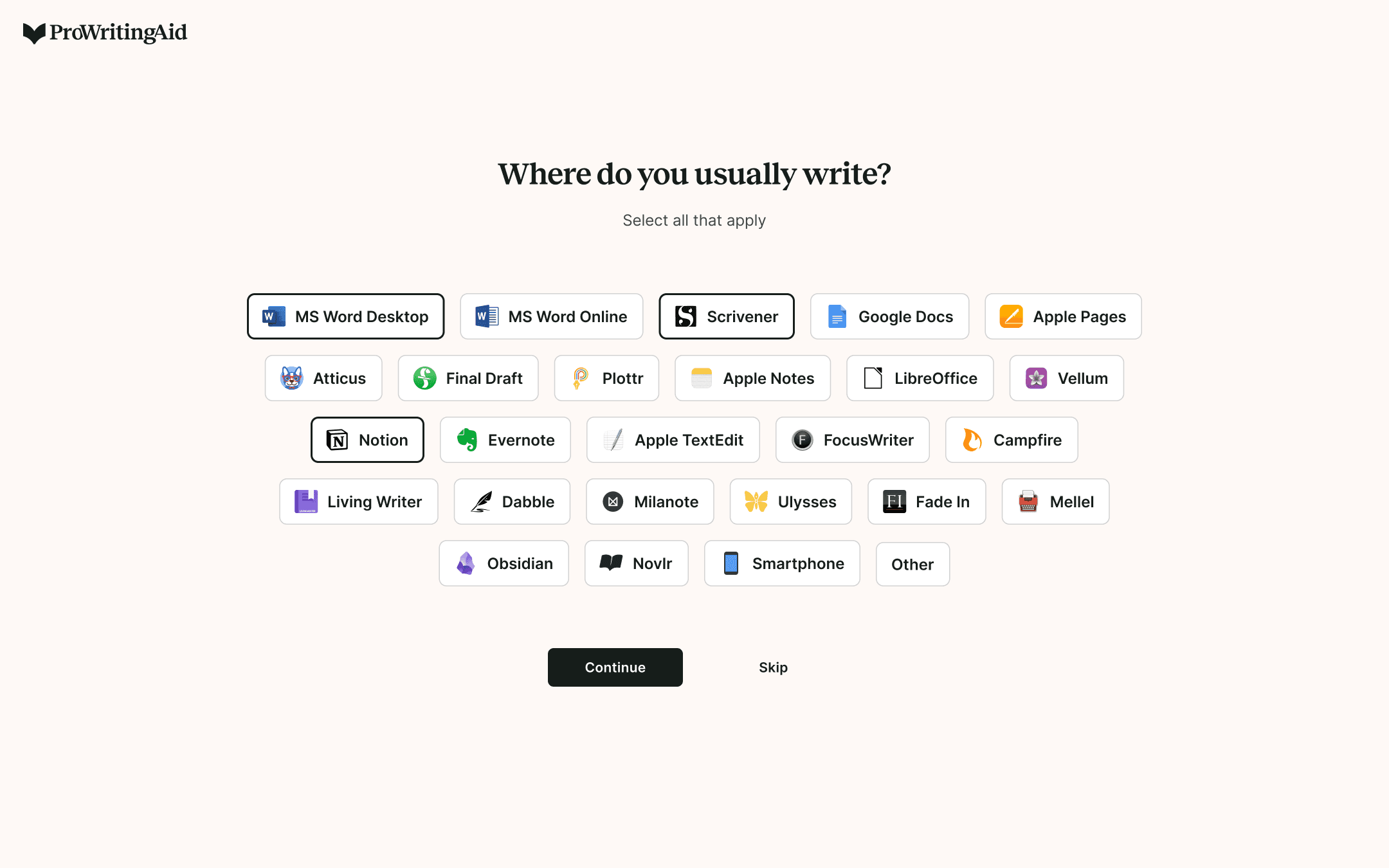
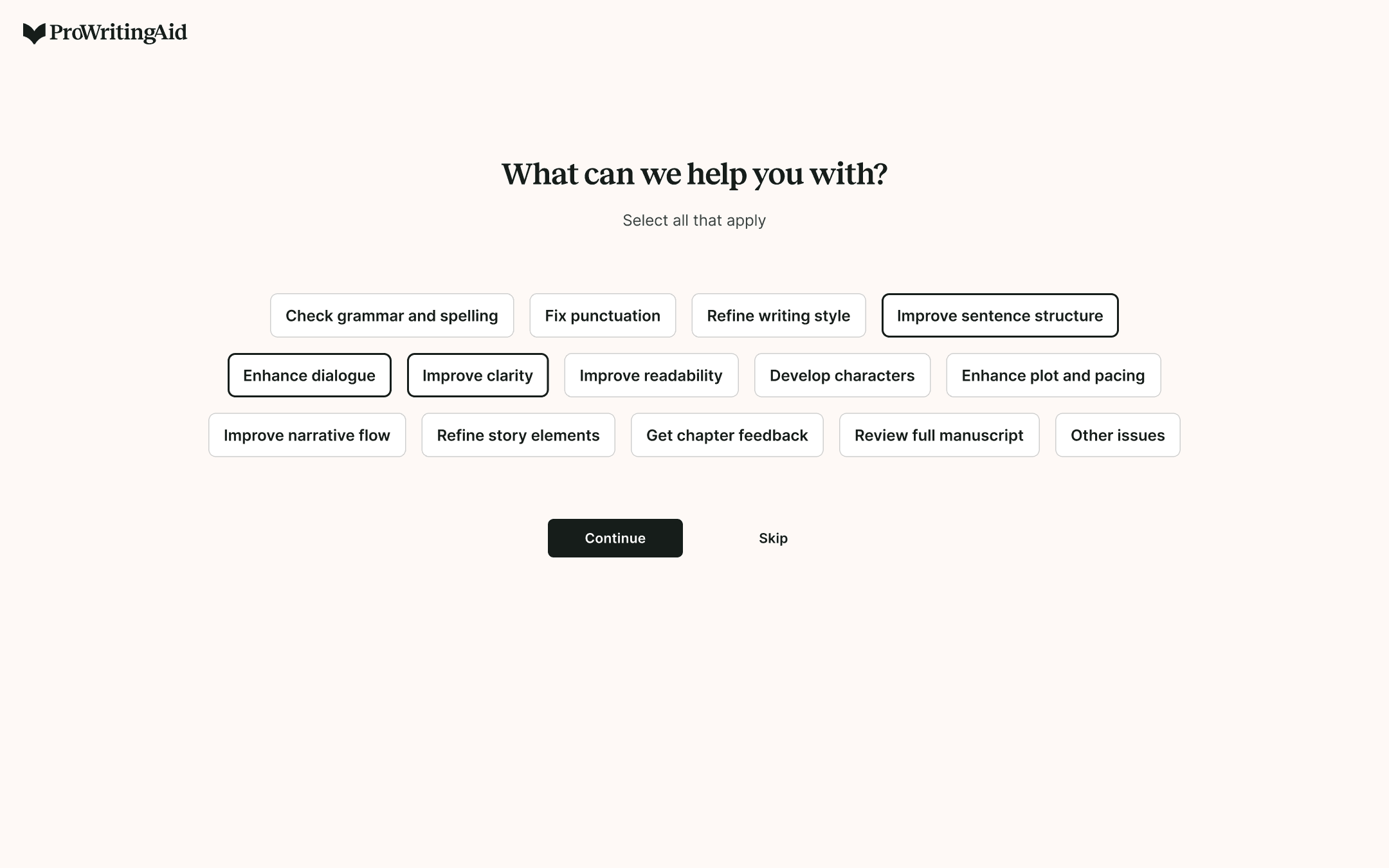
Designed full-screen onboarding questions to drive personalized, high-intent recommendations downstream.
Process
Business Challenge
Users were churning before they ever experienced the product's core value.
This early drop-off was capping our revenue potential. Our goal was to boost the number of users who became 'Activated' (New Activated Users D30) —meaning they accepted at least 10 suggestions in their first month— from 24% to a goal of 35% by the end of the quarter .
To get there, we first focused on on the funnel's top, aiming to improve the New Active Users metric (users reviewing a suggestion or running a report) from its stable rate of 65% to 75%. This was a necessary precursor to driving D30 activation.
Success Metrics:
OKR
New Activated Users D30
Accepting 10 suggestions in 30 days
Goal: 24% → 35%
Initial Metric
New Activate Users
Reviewing a suggestion or running a report,
Goal: 65% → 75%
Secondary Metric
Conversion to Paid (D1 and D7)
Download Rate of Extensions,
Bounce Rate in Web Editor
Discovery & Insights
When writers finally landed in the Web Editor, the experience failed to deliver on the product's value proposition
I used a Claude AI to quickly categorize and cluster user pain points from 8 user interviews with creative writers who never tried ProWritingAid befre, cutting the analysis time from 3 days to 4 hours. Key observed user pain points were:
Mismatch of Expectations: Users expected a standalone AI generation tool, not a companion extension, causing confusion and reluctance to download.
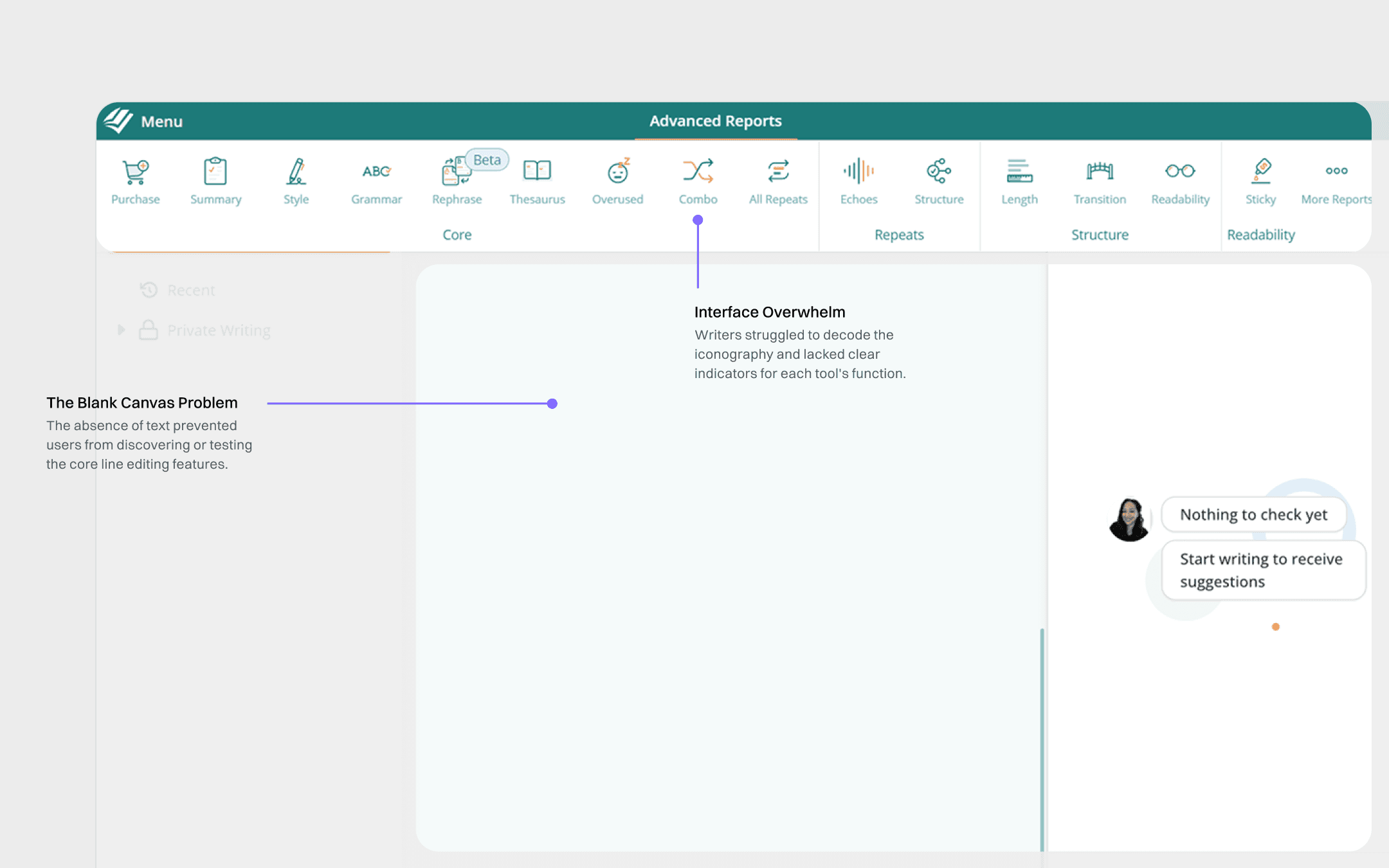
Interface Overwhelm: The web editor was described as "cluttered," causing users to instinctively close pop-ups and sidebars immediately.
The Blank Canvas Problem: New web editor sessions started with a blank canvas. We observed during calls that users trying to type did not reliably trigger meaningful suggestions or visual feedback, preventing the 'Aha Moment' where value is demonstrated.
Discovering the 'Aha' Moment
Users who uploaded their own document or successfully ran an advanced feature were significantly more likely to hit the 'Aha!' moment.
While auditing user behavior, we discovered a clear 'success signal': users who engaged with the Sticky Sentences Report were 36.9% more likely to convert to Premium—the highest conversion rate across the entire feature set.
Define: The Strategic Hypothesis
The goal was to validate the core value proposition—that the 'Aha!' moment is seeing an in-depth improvement beyond grammar spelling corrections.
The Hypothesis: If I create a personalized, guided onboarding path that funnels users directly to a proven 'Aha!' action—like running the Sticky Sentences Report on a sample text—I can increase the completion rate of the '10 Accepts' metric.
Key design decision: I focused on the 66% of low-intent users who arrived without text. By introducing a guided sample-text experience, we forced early exposure to high-value features, successfully accelerating time-to-value for our most "at-risk" segment.
Onboarding questions iterations
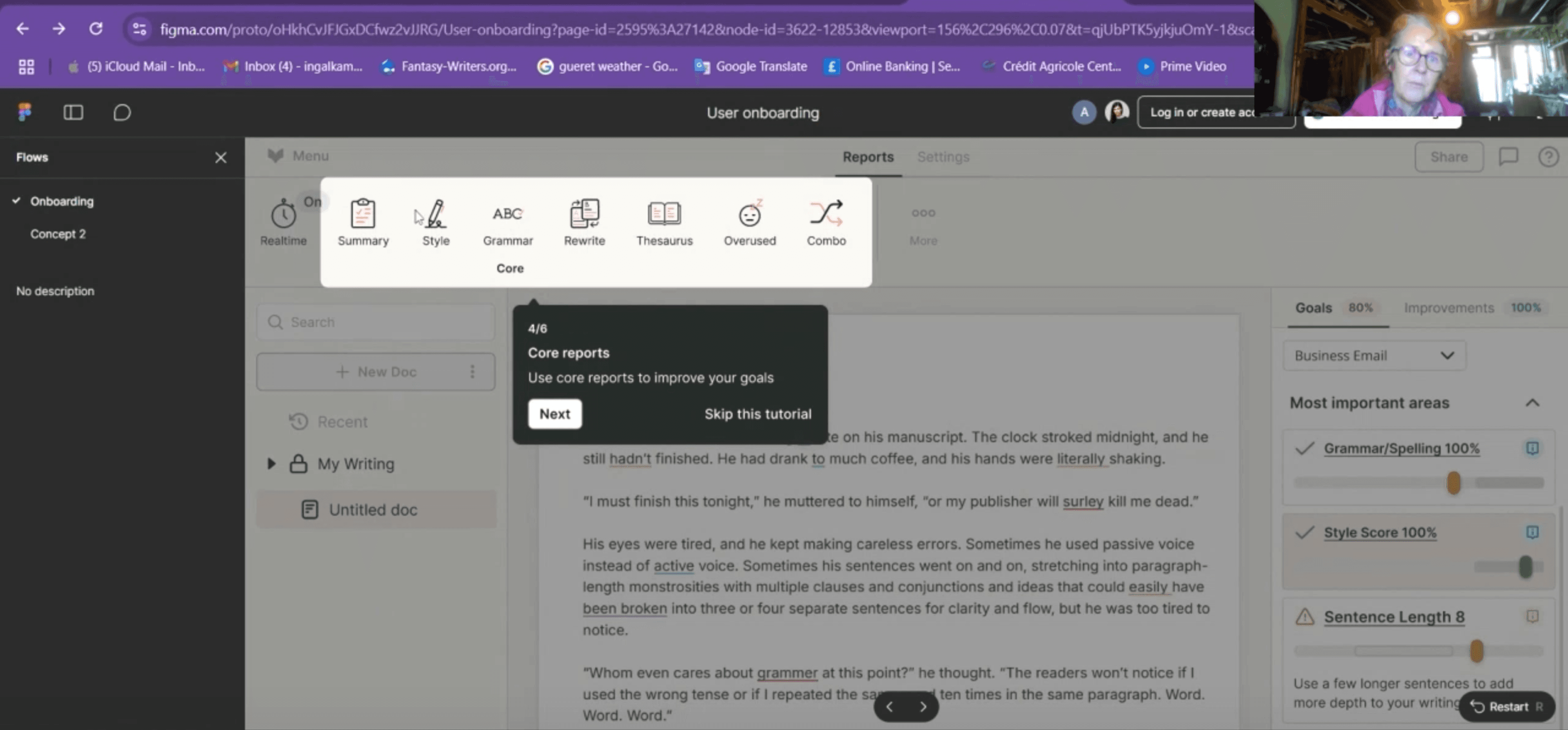
Writer Stage Question Redesign helped us understand our user base
Our initial single-select onboarding felt like a dead end for users. When 5% of writers manually opted for "Both," we pivoted to a multi-select flow.
This unlocked a massive insight: 55% of our audience are "Editors"—a high-value segment that activates at 74% and converts at 6.7%. We stopped guessing and started designing for our most profitable users.

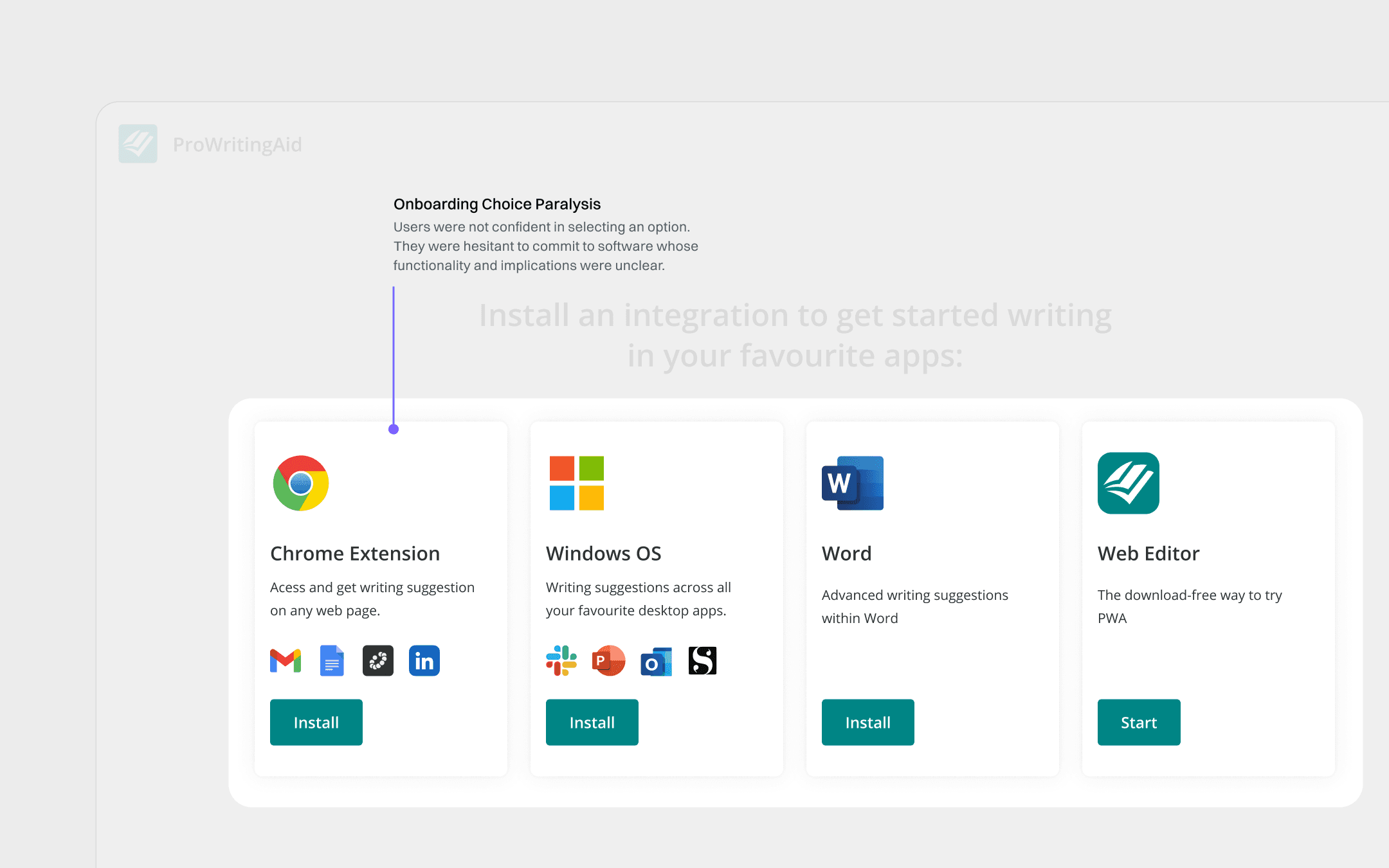
I deprecated the extension-first approach, routing 86% of traffic to the zero-install Web Editor.
Why? To prioritize "Time to Value." By removing the install friction, we allowed users to test the core product (Sticky Sentences) immediately, creating a "Try before you commit" psychology.
Design Evolution (Iteration 1)
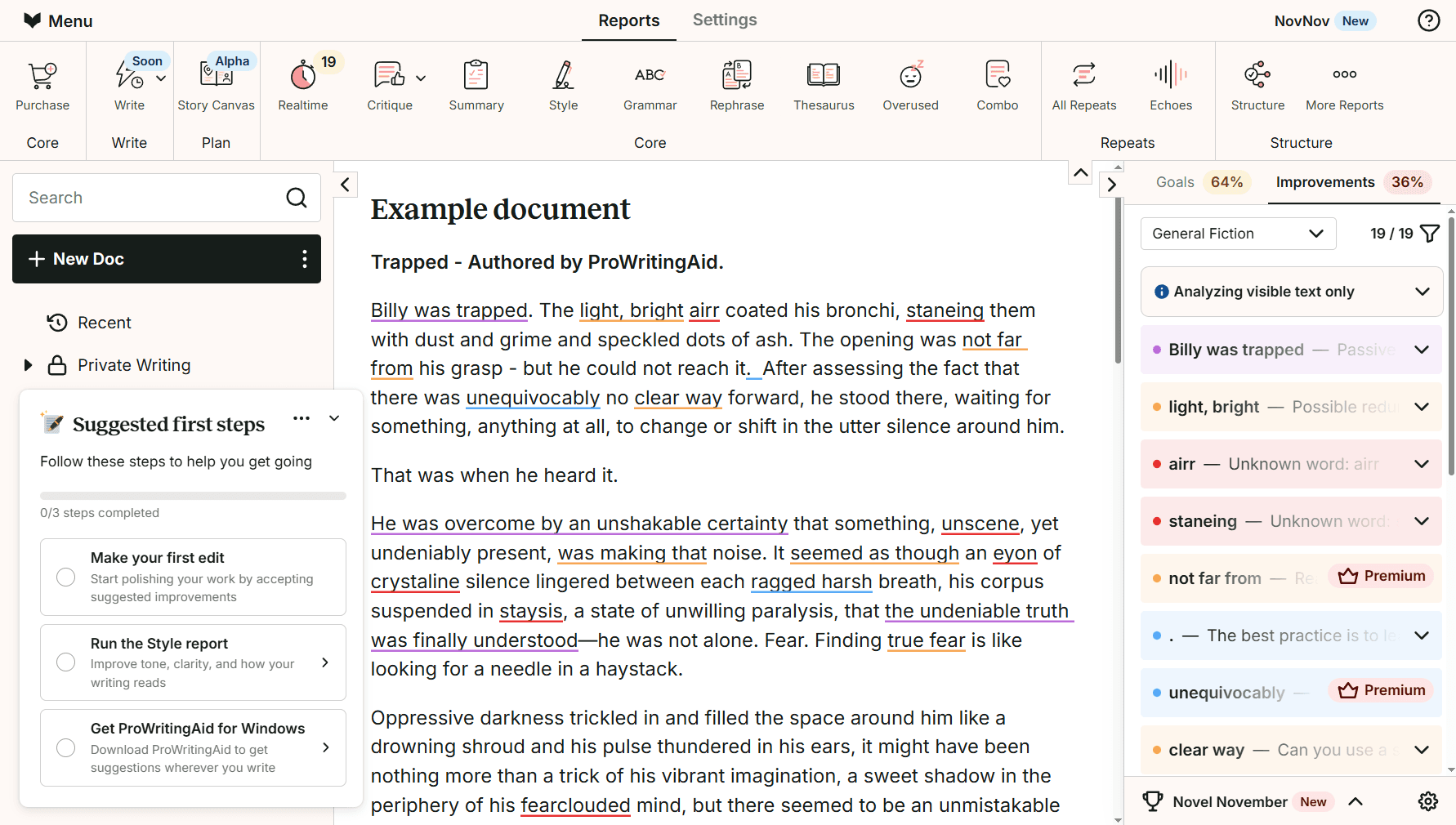
Legacy Hub Page created the primary drop-off point in the old onboarding flow, failing to guide new users to the best option for them and immediate value
Design Evolution (Iteration 2)
Designed new full-screen questions to solve the lack of user segmentation. The captured data powers personalized recommendations
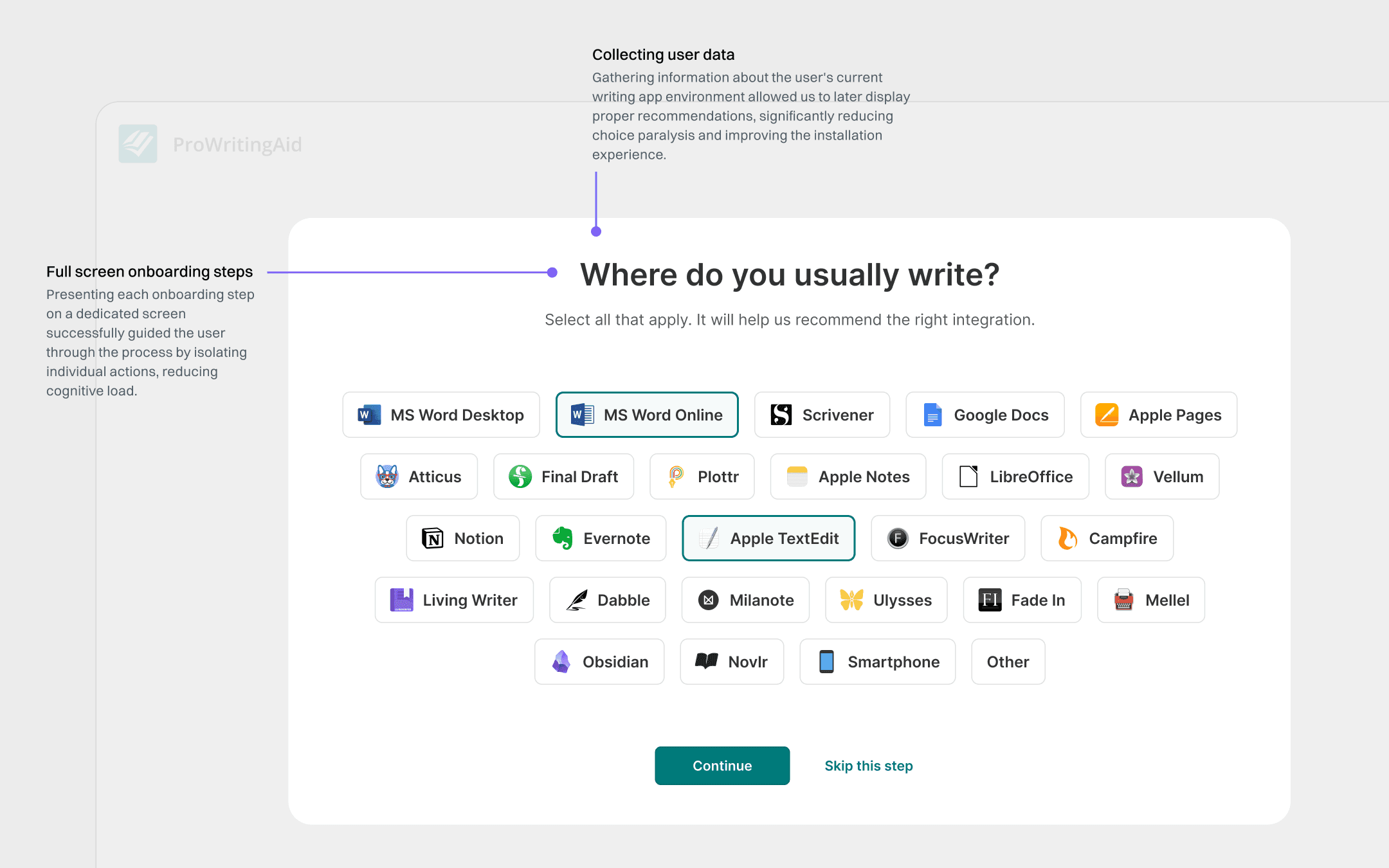
Design Evolution (Iteration 3)
New Dashboard Home ensured users could try the core product value before downloading and receive personalized recommendations
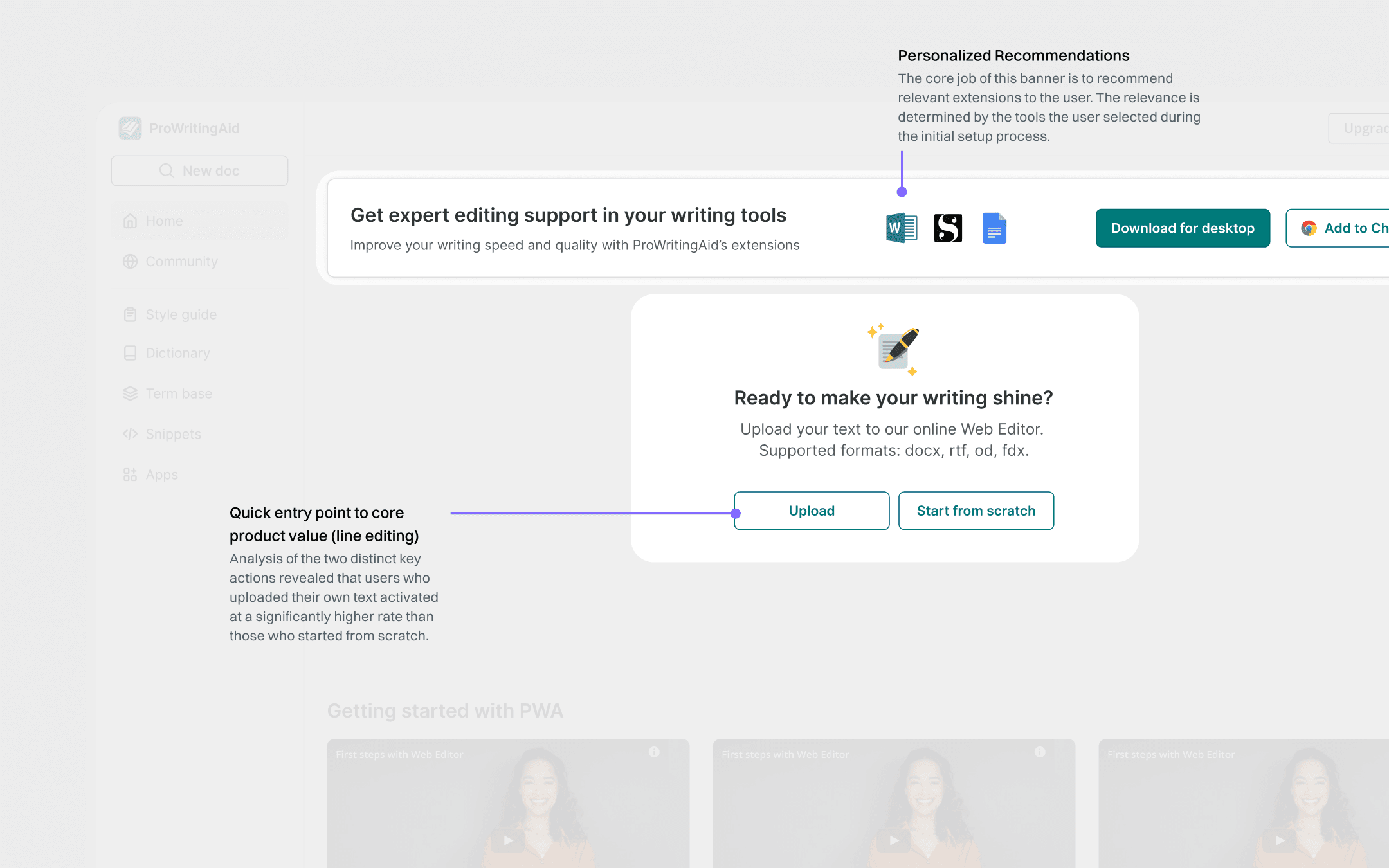
Design Evolution (Iteration 4)
Dashboard rebrand & running multiple experiments in pararell
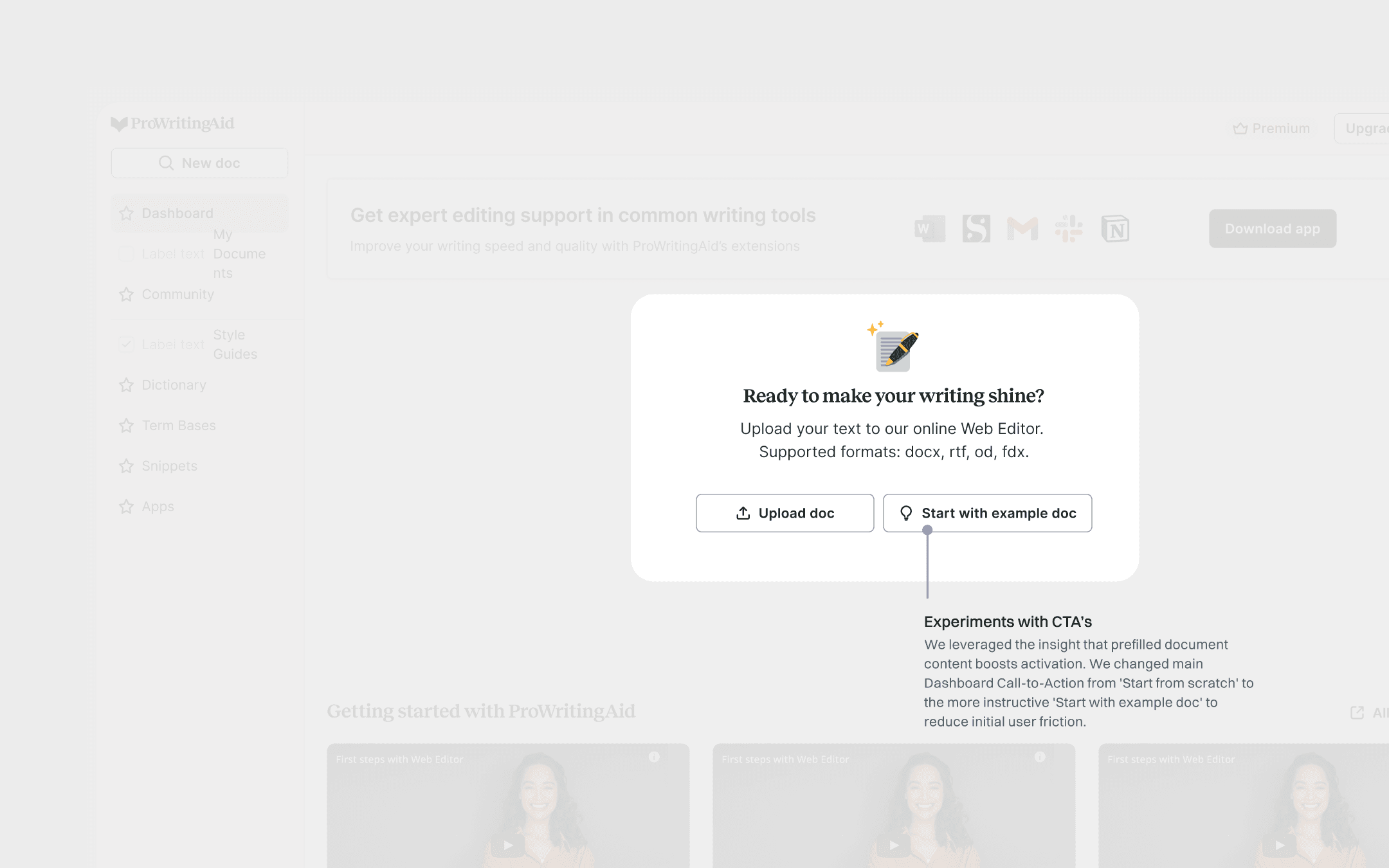
Design Evolution (Iteration 5)
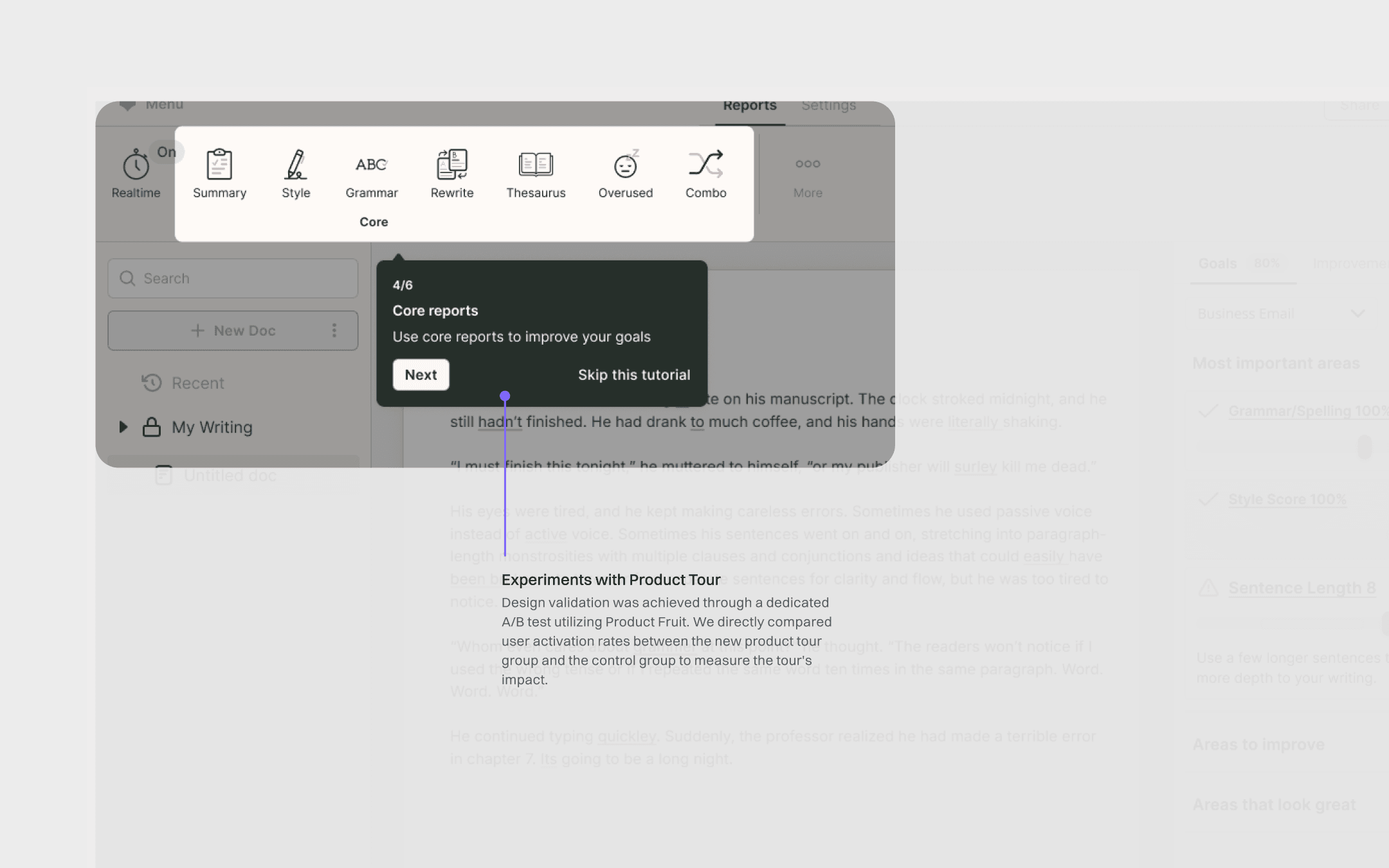
Conducted different targeted A/B tests:
Product tours
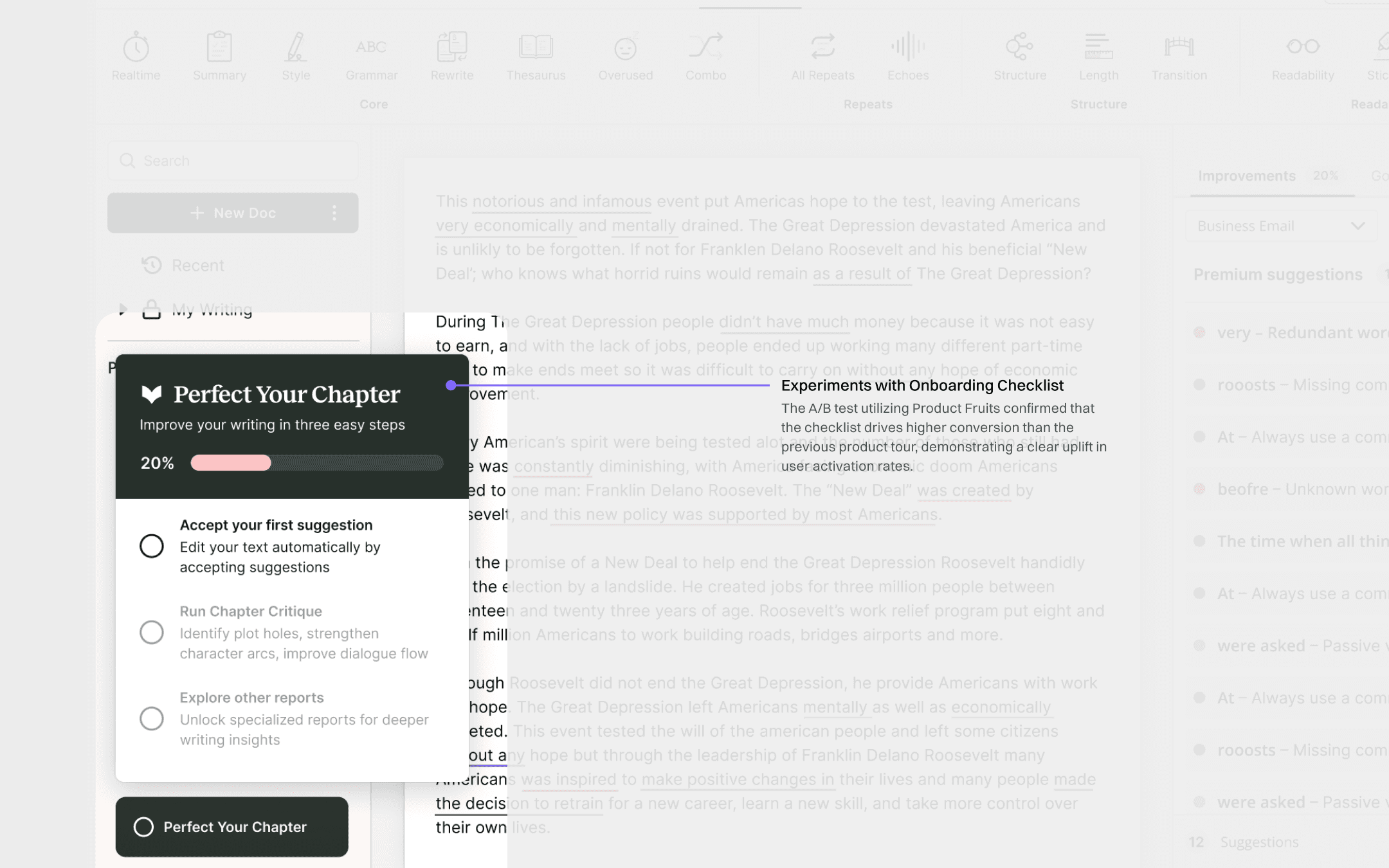
Checklist
Adding prefilled sample text
Limiting number of CTA's on dashboard home
AI Prototyping
Onboarding recommendations inside extensions
Successful experiments
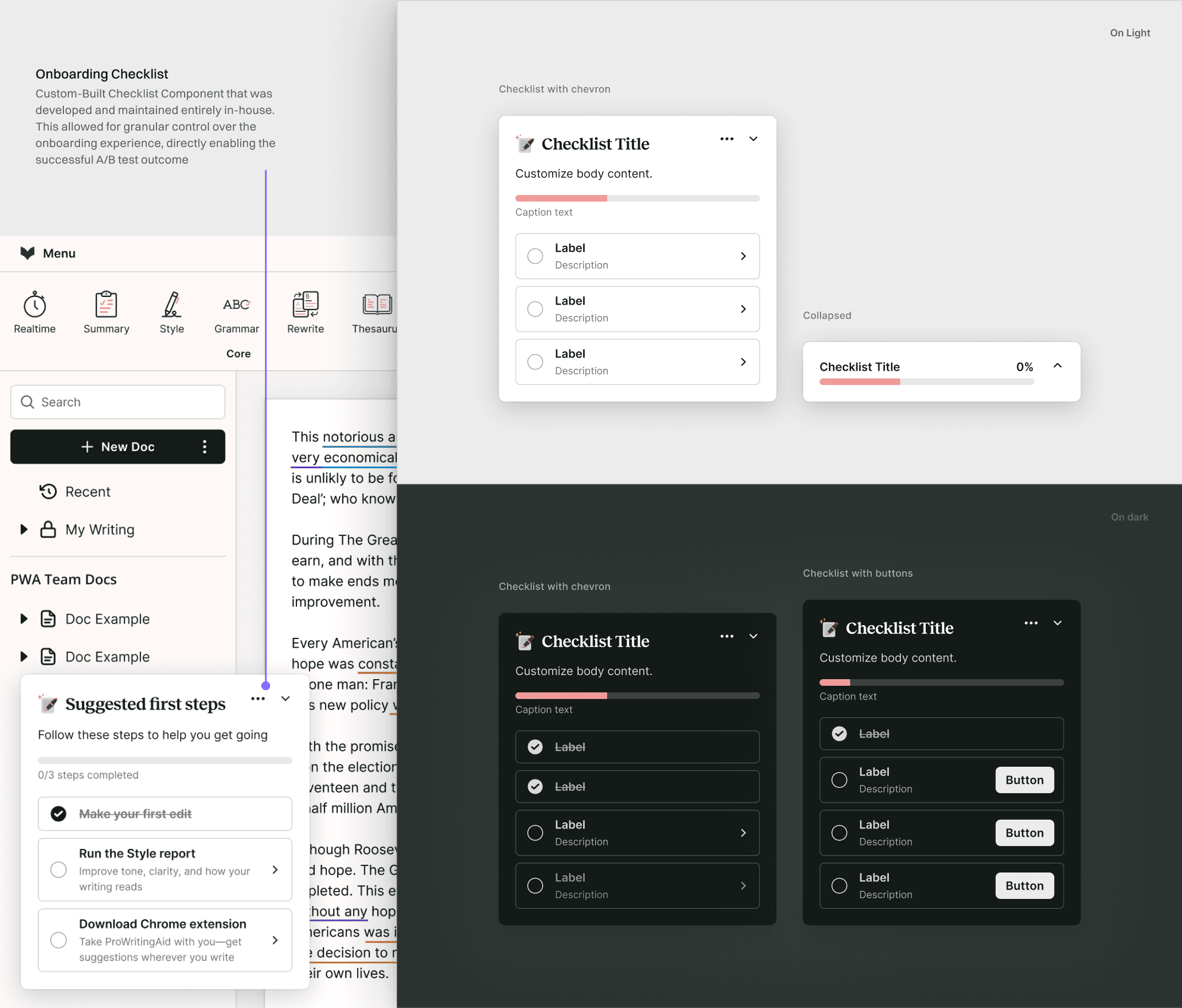
Onboarding checklist: This explicitly guided users to the key 'Aha!' actions, such as removing "glue words" with the Sticky Sentences report
Successful experimenrts
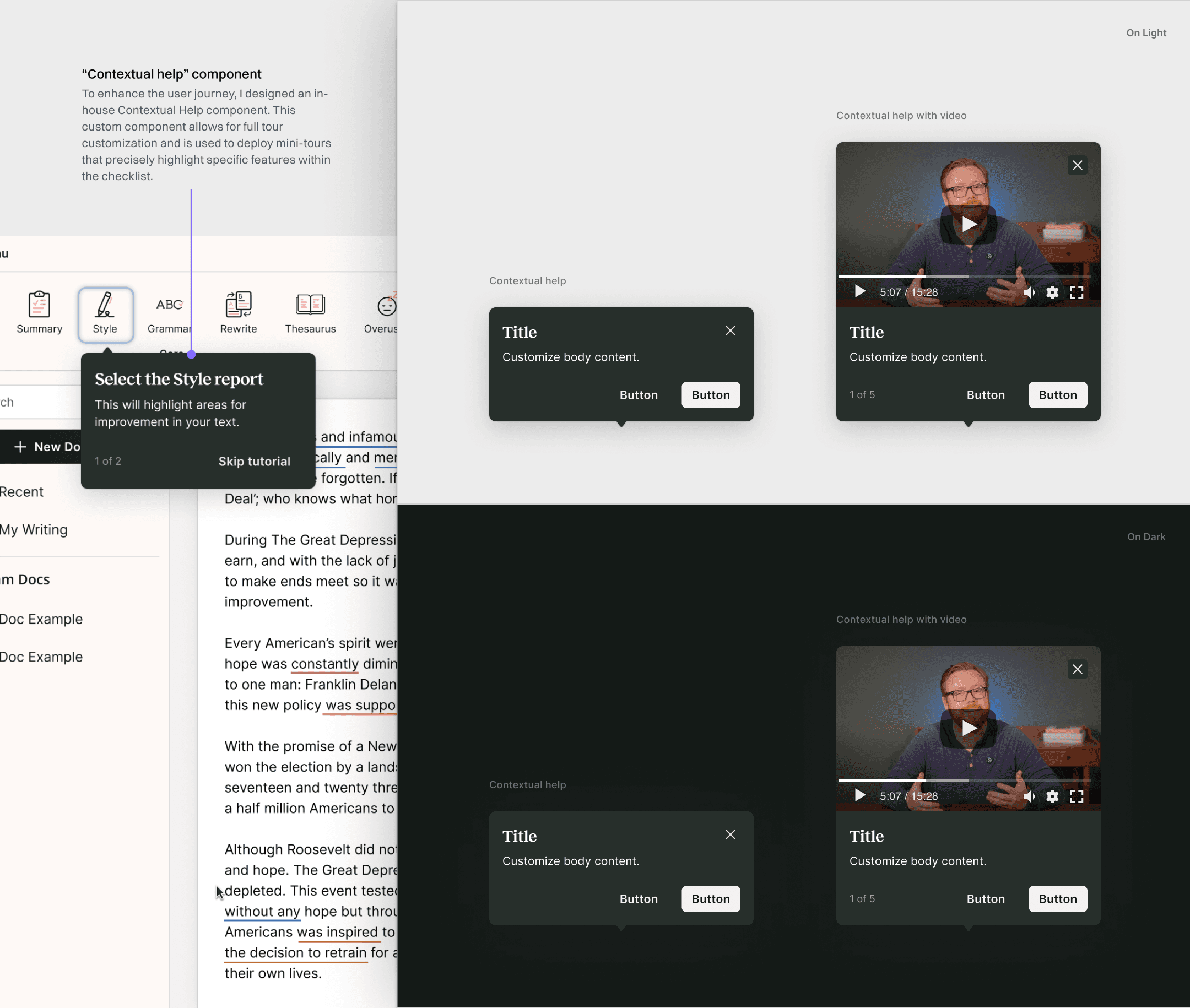
Mini tours: Contextual help component
Results
By shifting our focus to immediate in-product activation via a seamless onboarding and checklist experience we moved the needle on growth.
This initiative was a key driver in a +17% YoY revenue increase, proving that design-led activation is a direct contributor to the bottom line.
+17%
YoY Growth Revenue
+33%
increase in Day 1 Paid Conversion.
+5.5%
increase WoW in Activation D1
Day 1 Activation (users opening a suggestion) rose from 55% to 58% in Week 3 validating the stronger initial experience.
I proved that users who selected 'Edit my draft' and 'Upload' later had the highest activation rate 74% and conversion rate 6.71%, enabling us to focus acquisition efforts on this high-value segment.
Product Vision
Toolkit-first onboarding experience
Learnings
Crucial Trade-off & Next Challenge
While we successfully spiked Activation (+5.5%), we observed a downstream lag in Day 7 Retention.
Accelerating the 'Aha Moment' is only step one. True growth requires sustained engagement loops. This insight led to my subsequent initiative: focusing on D7 "Stickiness" rather than just D1 conversion which is our next OKR.